
What is the meaning of the Higher Self in different religions, philosophies, and paths?
As you continue the inquiry into “Who am I?”, a natural curiosity arises. You have seen the ego. You have tasted the position of the observer. You may even sense moments of spaciousness, clarity, or quiet presence. In light of these considerations, we can move on to the next topic: Is there a deeper level of self beyond all of this?
Across spiritual traditions, this is expressed in many ways. Some speak of the Higher Self, others of non-duality, enlightenment, union with God, or higher levels of consciousness. While the language differs, the heart of the teaching points to a single idea: your true nature is not separate from your soul, from consciousness, or from the Source itself.
Many people hear the phrase “Higher Self” and imagine a new, improved spiritual identity. But that idea can be misleading. The Higher Self is not a better version of your personality. It is not another mask you put on. It is not a more enlightened character in the story of “me”. The Higher Self is not a new identity. It is a shift in perspective.
The Higher Self as a perspective of consciousness
If the ego is the structure built from thoughts, memories, fears, and roles, and if the observer is your capacity to witness those structures, then the Higher Self can be understood as a wider field of awareness in which the sense of being a separate individual begins to soften. You do not become the Higher Self. You recognize the space from which all experience is already being seen. And from this perspective, you feel less compelled to define yourself, defend yourself, or constantly improve yourself. There is a natural simplicity, a quiet clarity, and a sense that you no longer need to hold tightly to the story of who you think you are.
Why are there so many teachings about this?
There are countless spiritual traditions that speak about higher states of awareness. Some use religious language, some philosophical, some psychological, some mystical. This does not mean they contradict each other. More often, they describe the same truth from different angles. Each tradition speaks to a different temperament, a different culture, a different way of understanding reality. One may appeal to the intellect, another to devotion, another to direct experience.
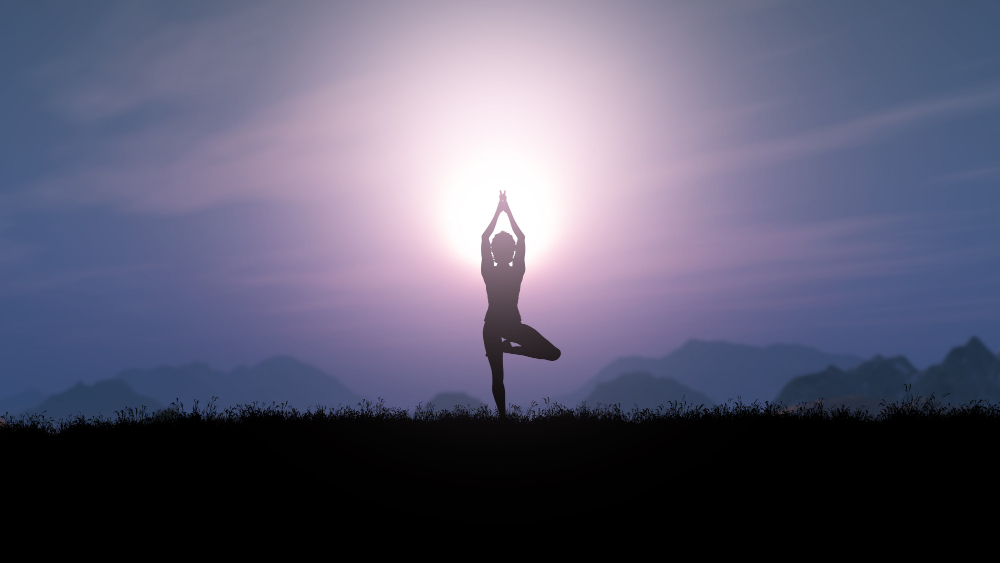
The mountain is one. The paths around it are many.
From unconsciousness to awareness to transcendence
A simple way to understand spiritual growth is to see it as a movement through three broad phases.
In unconsciousness, you are largely identified with your thoughts, emotions, and social roles. Your reactions feel automatic. Your sense of self is fragile and constantly seeking validation, control, and security. The question “Who am I?” rarely arises, because identity feels fixed and unquestioned.
In awareness, something changes. You begin to notice your inner world instead of being lost in it. You recognize patterns, beliefs, fears, and emotional habits. You start to sense that you are not your thoughts, not your moods, not your story. This phase often includes deep self-inquiry, emotional healing, and the gradual loosening of egoic identification.
In transcendence, the feeling of being a separate, isolated “self” begins to dissolve. Life is no longer experienced as “me versus the world.” There is a growing sense of unity, ease, and trust. Actions flow with less inner conflict. Compassion becomes more natural. The Higher Self is often associated with this stage, although at this depth even the idea of a “self” starts to feel unnecessary.
Layers of being in Vedantic wisdom
In Vedantic insight, awakening feels like a gradual release from false identification. At first, you believe you are the body. Then you notice you are not just sensations or physical form. Later, you see that emotions rise and fall without defining you. Then even thoughts and identity narratives are recognized as passing movements in awareness.
At a mature level, the sense of being a separate “person inside a body” begins to loosen. Life feels less like something happening to you and more like something unfolding through you. There is a stable sense of inner fullness that does not depend on external success, validation, or control. From this perspective, the Higher Self is not experienced as an extraordinary being, but as a quiet, steady presence that was always here – simply uncovered as layers of misidentification dissolve. The more deeply this realization stabilizes, the more natural peace, compassion, and freedom become.
Awakening in the Buddhist understanding
Deeper awakening in Buddhism is marked by the softening and eventual dissolution of the sense of a solid self. Instead of feeling like a fixed center of experience, you begin to experience yourself as a flow – thoughts, emotions, sensations, and perceptions arising without a permanent owner.
At advanced stages, suffering decreases not because life becomes perfect, but because clinging weakens. Pain may still occur, but it is no longer wrapped in a tight story of “Why is this happening to me?” Experience becomes more direct, more open, less filtered through defensiveness or craving. A sense of unity often emerges, not as a mystical belief, but as a lived recognition that everything is interconnected. Compassion deepens naturally, because harming others begins to feel like harming yourself. The world no longer feels like an enemy to conquer, but like a field of shared existence.
Expanded consciousness in shamanic traditions
In shamanic experience, higher awareness is often described as a widening of perception beyond personal identity. You may feel deeply connected to nature, ancestors, animals, or unseen dimensions of existence. The boundary between “self” and “world” becomes more porous. At mature levels, identity expands beyond the individual narrative. You may feel like a participant in a living cosmos rather than an isolated being struggling for survival. Actions feel guided not only by personal preference, but by a sense of harmony with larger forces.
This expanded state is often accompanied by a strong sense of meaning. Life feels purposeful not because of ambition, but because it is recognized as part of a greater unfolding. The Higher Self here is experienced as a broader identity that includes the world rather than standing apart from it.
Non-Duality and the end of the separate self
Non-dual realization is often the most radical. At this depth, the sense of being a separate individual can dissolve entirely. There is no longer a feeling of “I am here, and the world is out there.” Instead, there is simply experience happening within a single, indivisible awareness. This can feel shockingly ordinary. No fireworks are required. The shift is subtle but profound: life is no longer divided into subject and object, observer and observed, seeker and sought.
From this perspective, the idea of a Higher Self becomes almost unnecessary. There is no higher or lower – only what is. The search ends not because you achieved perfection, but because it becomes clear that nothing was missing to begin with. What remains is simplicity, clarity, and an effortless sense of belonging to everything that exists.
Union with God in Christian mysticism
In the deeper currents of Christianity, enlightenment is often described not as becoming someone greater, but as dying to the false self so that divine life can live through you. Saints and mystics speak of a gradual surrender of egoic will, pride, and self-centeredness, until what remains is humility, love, and trust in God. At mature levels, the sense of separation between “me” and God softens. Prayer becomes less about asking for things and more about resting in divine presence. Love expands beyond personal preference into unconditional compassion, forgiveness, and service. The experience of the Higher Self here is not framed as personal enlightenment, but as union with God’s will, where one’s life feels guided, meaningful, and held by a greater intelligence. The individual self does not disappear, but it becomes transparent, allowing divine love to flow through ordinary human life.
The Higher Self in New Age spirituality
In New Age perspectives, the Higher Self is often understood as your eternal, multidimensional essence beyond time, personality, and physical identity. It is seen as the wiser, more expansive aspect of your being that holds a broader view of your soul’s journey across lifetimes and dimensions. At higher levels of awareness, life begins to feel guided by synchronicity rather than randomness, and challenges are interpreted as lessons chosen for growth. Many people report a stronger sense of purpose, intuition, energetic sensitivity, and connection to universal intelligence. When this awareness matures beyond fantasy and spiritual escapism, it can lead to a grounded sense of unity, compassion, and responsibility – where spiritual insight is not about feeling special, but about living more consciously, lovingly, and authentically in the human experience.
One truth, many languages
When you step back and look at different religions, philosophies, concepts, and paths, you may notice that they do not really describe different goals. They describe the same transformation in different cultural dialects. Some speak of shedding layers of identity, others of dissolving the self, surrendering to God, awakening into presence, expanding into cosmic consciousness, or realizing unity beyond all separation. The metaphors differ, but the lived experience they point toward carries a similar flavor. The grip of ego loosens, the sense of isolation softens, life feels less like a personal struggle and more like an unfolding intelligence. Love becomes less conditional, fear loses some of its authority, and the need to prove yourself or secure your worth begins to fade.
What changes most profoundly is not what you believe, but how reality is experienced. Instead of living as a contracted self trying to control the world, you begin to live as a wider awareness participating in it. Instead of feeling like a fragment fighting for survival, you start to sense an underlying wholeness that includes you, others, nature, and whatever name you give to the divine.
Some traditions frame this as union with God, some as enlightenment, some as Higher Self realization, some as the end of the self altogether. But beneath the language, there is a shared movement: from separation to connection, from contraction to openness, from fear to clarity, from seeking to being.
And perhaps the most honest conclusion is this: no single tradition owns the truth. Each offers a lens. Some lenses resonate more with certain personalities, cultures, or stages of the journey. None of them need to cancel the others out. Together, they form a mosaic pointing toward the same essential discovery – that what you are looking for has always been closer, simpler, and more intimate than the mind ever imagined.