
When you hear “enlightenment,” you might picture a monk on a remote mountain. The original concept is far more practical—it’s a 2,500-year-old guide for reducing the stress of modern life. The framework begins not with a rule, but with a diagnosis of the human condition known as the Four Noble Truths.
At its core, Buddhism identifies a fundamental problem: a subtle, pervasive background noise of stress and dissatisfaction. This isn’t just about major tragedies; it’s the feeling of being unfulfilled, anxious, or constantly wanting the next thing. This experience is called dukkha. According to this ancient philosophy, the cause isn’t bad luck, but our own cycle of craving and attachment—the fleeting high of a new purchase or social media “like” that quickly fades, leaving us wanting more.
Because the cause is internal, the solution is too. The famous Eightfold Path is the practical prescription for overcoming dukkha. It represents the fourth Noble Truth—the tangible, actionable way to end suffering by methodically retraining our minds and habits for lasting peace and clarity.
The Path Isn’t a Checklist: How Its 3 Divisions Work Together
Looking at a list of eight steps can feel like another to-do list. The good news is that the Eightfold Path isn’t a linear sequence where you must perfect step one before moving to step two. Instead, the eight practices are organized into three core areas that you cultivate together, with each one supporting the others.
This structure makes the path logical and easier to practice. The three divisions are:
- Wisdom (Paññā): Seeing the world clearly.
- (Right Understanding, Right Intention)
- Ethical Conduct (Sīla): Behaving in ways that create peace.
- (Right Speech, Right Action, Right Livelihood)
- Mental Discipline (Samādhi): Training the focus and awareness of your mind.
- (Right Effort, Right Mindfulness, Right Concentration)
Think of these divisions like a three-legged stool—it needs all three legs to be stable. Wisdom acts as your map, Ethical Conduct ensures you walk the path kindly, and Mental Discipline gives you the focus to keep going. They work in concert to create a balanced life.
Step 1: Right Understanding—Your Inner GPS
Every journey needs a map, and the first step, Right Understanding (Samma Ditthi), provides exactly that. As the first part of the Wisdom division, it isn’t about memorizing doctrines. It’s about gaining a practical view of how life actually works. Think of it as a GPS for your mind, helping you see the terrain clearly so you can navigate toward genuine happiness and away from stress.
At its core, Right Understanding is seeing the law of cause and effect in your own life—the practical heart of what many call Karma. This isn’t a cosmic system of reward and punishment, but a natural principle: skillful, compassionate actions tend to lead to peace, while unskillful, reactive actions tend to lead to conflict. It’s the insight that yelling in traffic only poisons your own mood, while a moment of patience costs you nothing.
Without this clear viewpoint, the other seven steps would be aimless. Why practice Right Speech if you don’t understand that harsh words create suffering? Why cultivate mindfulness if you don’t see it helps you make wiser choices? Right Understanding provides the crucial “why” that fuels the entire journey, giving purpose to your efforts.
Step 2: Right Intention—Setting Your ‘Why’
Right Intention (Samma Sankappa) is the choice of destination. It’s the conscious commitment to point your thoughts and energy in a kinder, wiser direction, bridging the gap between seeing clearly and starting to change. It’s about purifying your motivation—shifting away from impulses like craving and anger, and toward intentions that create peace.
This practice encourages cultivating three specific mindsets: the intention of letting go (releasing our grip on desires), the intention of good-will (genuinely wishing others well), and the intention of harmlessness (committing to cause no harm). This doesn’t mean you’ll never feel irritation again. Rather, it’s about noticing that flicker of anger and consciously choosing to nurture patience instead.
Ultimately, Right Intention powers your ethical choices. A simple way to practice this is to pause before you speak or act and ask yourself: “What is my real motivation here?” This question can be enough to steer you toward a more skillful path.
Step 3: Right Speech—Transforming Your Relationships
Once your intention is clear, it first takes root in the world through your words. Right Speech (Samma Vaca) recognizes that every conversation is an opportunity to either create connection or division. This step isn’t about becoming passive; it’s about using speech as a tool to build a more peaceful reality.
This practice encourages us to avoid four types of harmful communication: lying, divisive speech like gossip, harsh language, and idle chatter. Instead, the path invites us to ask before we speak: Is it true? Is it kind? Is it beneficial? If the answer isn’t “yes” to all three, silence is often the most skillful response.
The impact can be immediate. Think of the energy saved by not engaging in office gossip, or the trust preserved by speaking truthfully during a disagreement. This conscious use of words is the first step in ethical conduct, extending naturally to our actions.
Step 4: Right Action—Beyond Just ‘Doing Good’
Following Right Speech, this step extends ethical awareness to our deeds. Right Action (Samma Kammanta) is about ensuring our actions create peaceful ripples in the world. It’s traditionally defined by three commitments: abstaining from taking life, from taking what is not freely given, and from sexual misconduct.
The goal isn’t just following rules; it’s a strategy for cultivating a guilt-free mind. When our actions are harmless, we have no regrets to replay. Unskillful actions create internal agitation, while skillful actions build tranquility and self-worth. Every choice becomes a direct cause of our future state of mind.
This principle comes alive in small, everyday choices, like being honest when no one is watching. Every time you act with integrity, you build a foundation of self-respect that extends into your professional life.
Step 5: Right Livelihood—Making Your 9-to-5 Matter
Work consumes a large portion of our waking hours. Right Livelihood (Samma Ajiva) asks a profound question: How can we earn a living in a way that doesn’t cause harm and, ideally, contributes to the well-being of others? This step integrates our practice into the workweek, transforming a job into a meaningful part of our path.
This path encourages us to avoid professions built on exploitation, deception, or harm—such as those involving weapons, intoxicants, or deceit. The goal isn’t a rigid list of “good” and “bad” jobs, but honest self-reflection: Does my work support human flourishing, or does it profit from creating craving?
Of course, not everyone can simply quit their job. You can practice Right Livelihood in almost any role by choosing integrity, refusing to engage in toxic office gossip, treating customers with respect, and helping colleagues succeed. By focusing on how you work, you make your profession a training ground for ethical conduct.
Step 6: Right Effort—Nurturing Good Habits
Good intentions mean little without the energy to act on them. Right Effort (Samma Vayama) is the skillful application of your energy—the engine that drives the path forward. It’s not about “white-knuckling” through life. Instead, think of your mind as a garden. Right Effort is the gentle, persistent work of a gardener who knows what to pull and what to nurture.
This practice involves four actions:
- PREVENT unwholesome thoughts from taking root.
- ABANDON unwholesome thoughts that have already arisen.
- CULTIVATE wholesome, positive thoughts.
- MAINTAIN the wholesome thoughts that are already present.
Rather than forcefully suppressing negativity, you simply shift your focus. When you catch yourself replaying an angry conversation (a weed), you gently redirect that energy toward gratitude (a flower). This balanced effort avoids both struggle and laziness. Noticing these mental weeds and flowers requires a clear-eyed awareness, which leads to our next step.
Step 7: Right Mindfulness—True Focus in a Distracted World
That clear-eyed awareness is Right Mindfulness (Samma Sati). While “mindfulness” is a modern wellness buzzword, its role on the path is more profound. It isn’t about emptying your mind or forcing calm. It’s the practice of paying full attention to the present moment—your thoughts, feelings, and sensations—on purpose and without judgment. You learn to observe your experience as it unfolds, rather than being swept away by it.
The most transformative benefit of mindfulness is the space it creates. When you receive a stressful email, the stimulus and your anxious reaction often feel instant. Mindfulness introduces a crucial pause. In that gap, you can notice anxiety rising before it dictates your response. This tiny moment of awareness gives you the freedom to choose your action.
You can practice it right now by feeling the weight of your body in your chair or the sensation of air entering your lungs. When washing dishes, just notice the warmth of the water. This gentle, consistent returning of your attention is the training that prepares you for the final step.
Step 8: Right Concentration—Sharpening Your Focus for Peace
With the steady awareness from Right Mindfulness, we arrive at the final step: Right Concentration (Samma Samadhi). This is the ability to unify your mind, allowing it to rest its full attention on a single point. Imagine your mind as a lake: mindfulness stops the water from churning, and concentration is the resulting stillness where the surface becomes perfectly clear and reflective.
This deep focus isn’t achieved by trying harder; it arises naturally when the other seven parts of the path work in harmony. Right Effort has cleared away mental clutter, and Right Mindfulness has stabilized your attention. Concentration is the beautiful result of that balanced practice—a state of effortless stability.
In this collected state, the mind becomes exceptionally peaceful. The background noise of anxiety and craving fades, allowing genuine insight to emerge. This isn’t an escape from the world, but the cultivation of a mind stable enough to meet life with unshakable peace and wisdom. This final step isn’t an endpoint; it reinforces the entire journey.
Putting It All Together: A Wheel, Not a Ladder
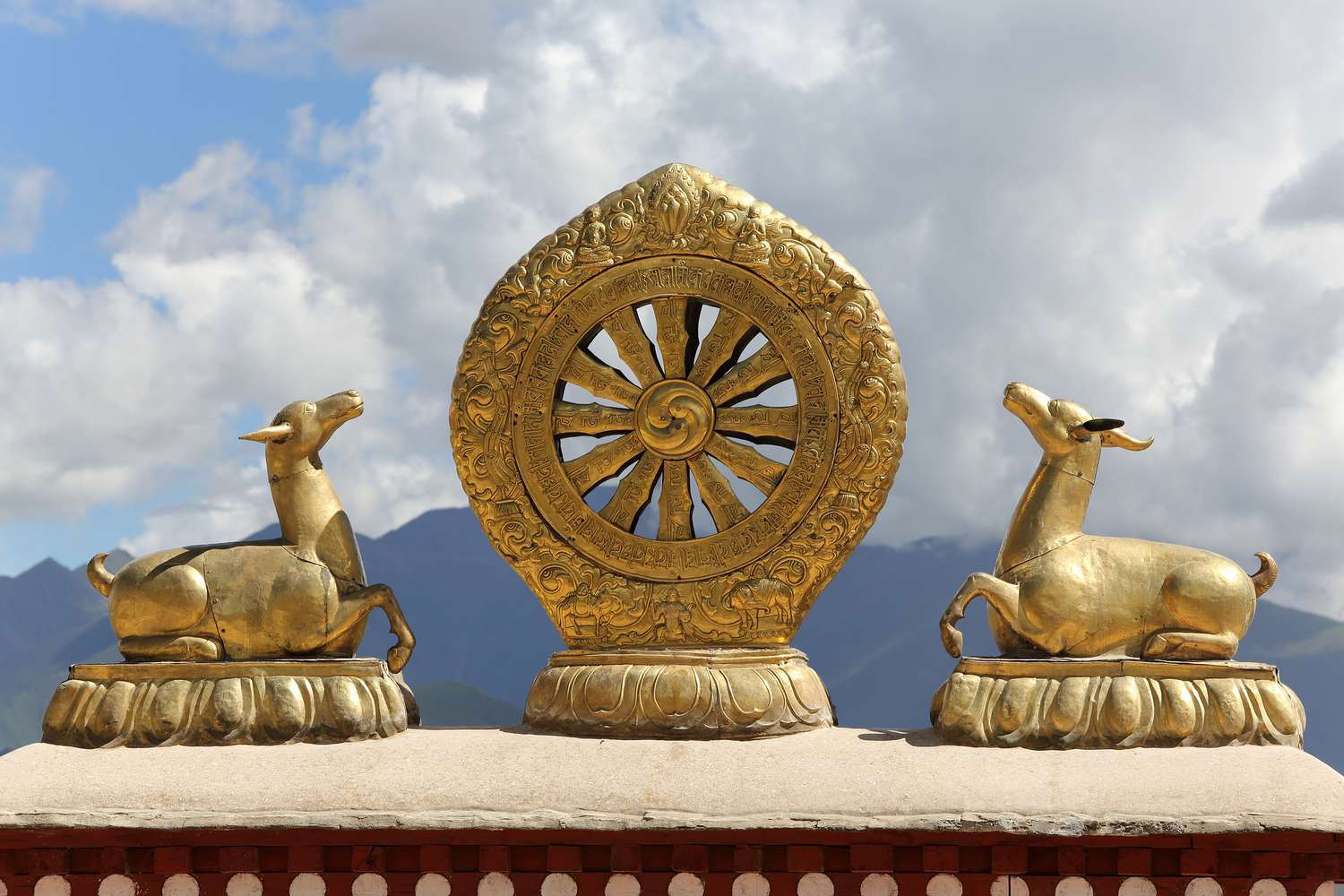
It’s tempting to see these eight steps as a ladder to climb. A far more accurate image is a wheel with eight spokes. You don’t perfect one spoke and then move on; you work on all of them together. Each part supports the integrity of the whole wheel, and without any one of them, the journey becomes unbalanced.
This synergy is where the real power lies. For example, practicing Mindfulness (Step 7) helps you notice an impulse to gossip. This pause gives you space to choose Right Speech (Step 3). That choice strengthens your ethical foundation, which in turn clarifies your mind for better Concentration (Step 8). This is how the path works: as an integrated system for a more balanced life.
Your First Step on the Path Today
The Eightfold Path is a practical map for a more intentional life and spiritual growth, offering timeless principles for inner peace. But a map is only useful when you take a step. Don’t feel you must master all eight parts at once.
For the next 24 hours, simply choose one—like Right Speech. Bring a gentle awareness to your words, noticing how it feels to speak with kindness and honesty. Don’t strive for perfection; just observe.
This journey is a practice, not a race. It begins with a single, conscious moment. By bringing this quiet attention to one small part of your day, you are no longer just reading the map—you are walking the path.