
Have you ever thought of an old friend, only for them to text you that very day? Or maybe you were wrestling with a big decision and suddenly saw the same number or symbol appear in three unrelated places. These moments can feel strange and significant – like more than just random chance.
If you’ve felt that uncanny connection, you’ve experienced what many people call a synchronicity. Coined by influential psychologist Carl Jung, the term describes events that are not just coincidences, but meaningful ones. They are the moments when your inner world of thoughts and feelings seems to align perfectly with the outer world.
Many interpret these meaningful coincidences as reassuring signs from the universe, holding a deep spiritual meaning. Understanding how they differ from random chance offers a balanced way to appreciate these powerful, personal moments.
Synchronicity vs. Coincidence: Spotting the Meaning in Random Events
What truly separates a meaningful coincidence from a random one? While the terms are often used interchangeably, the key difference isn’t the event itself, but your personal connection to it.
A simple coincidence is a random occurrence with no obvious link, like you and a coworker wearing the same shirt. It’s a fun but forgettable moment with no deeper story attached. A synchronicity, however, is a coincidence that feels uniquely significant. It’s an external event that mirrors an internal thought, feeling, or problem, stopping you in your tracks because the timing feels too perfect to be chance.
Imagine you’re agonizing over whether to move to a new city. As you’re lost in thought, a bus pulls up with a large ad for that very city. For anyone else, it’s just an ad. For you, it’s a startling, meaningful coincidence. That feeling of a direct, personal message is the true signature of synchronicity.
What Synchronicity Looks Like in Daily Life: 3 Common Examples
Once you start paying attention, you may find synchronicities happening around you. They aren’t always big, life-altering events; more often, they are small, quiet moments of connection that feel like a wink from the universe. Learning to spot them is less about searching for signs and more about noticing the magic already present.
Here are three common forms of synchronicity:
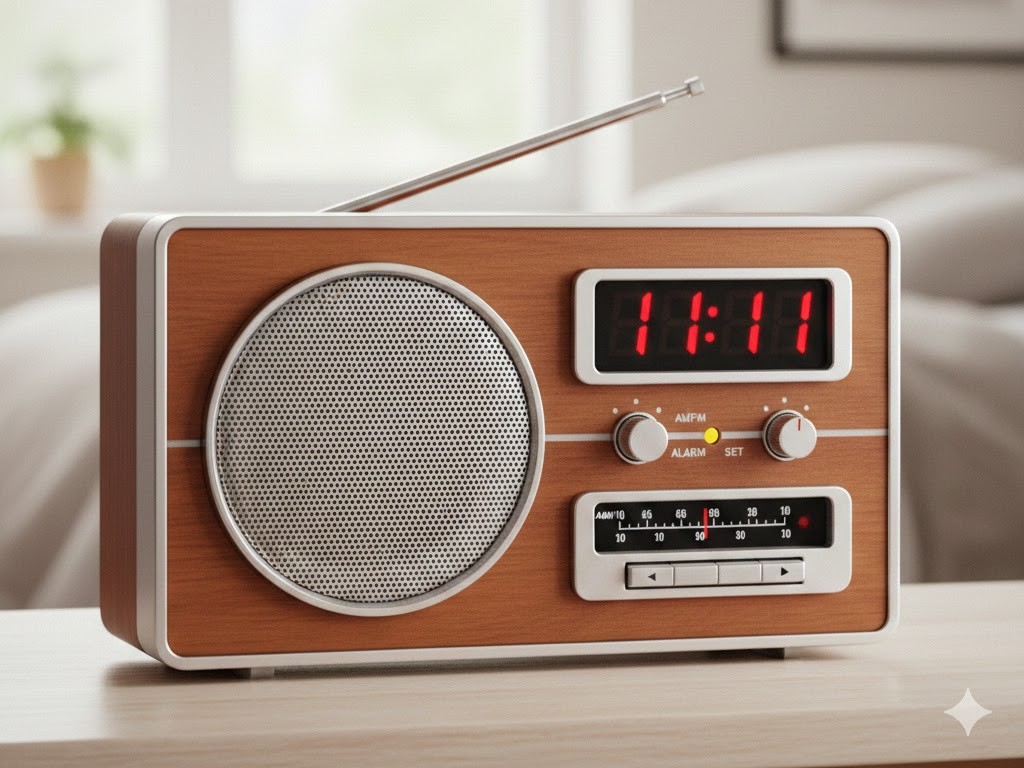
- Repeating Numbers or Symbols: Have you ever glanced at the clock at exactly 11:11, or seen the same number sequence (like 444 or 222) on license plates and receipts all day? For many, these so-called “angel numbers” serve as a synchronistic nudge, especially when they appear while you’re contemplating a significant question.
- Perfectly Timed Media: Another classic example is turning on the radio just as a song starts playing whose lyrics speak directly to your situation. You might also be scrolling online and stumble upon an article or quote that contains the exact answer or encouragement you were seeking.
- Overheard Snippets of Conversation: This one can feel particularly startling. You could be wrestling with a problem in your mind while walking down the street, only to overhear a single sentence from a stranger’s chat that perfectly addresses your internal dilemma.
In each case, the event itself is ordinary. What makes it a synchronicity is the uncanny timing and its deep personal relevance to your inner world. This idea of “meaningful coincidence” has fascinating roots in psychology.
The Mind Behind the Meaning: Carl Jung’s Theory of Synchronicity
The term for these uncanny moments was born from the work of Swiss psychologist Carl Jung. Fascinated by profound coincidences in his own life and those of his patients, Jung needed a word to describe events connected not by cause, but by meaning. He coined the term “synchronicity” to name this powerful human experience.
His theory centered on an “acausal connecting principle,” where some events are linked without one directly causing the other. For instance, your thought didn’t force the song to play on the radio, but the two events – your inner feeling and the outer event – were connected by the personal meaning they held for you at that exact time.
For Jung, these moments were potential clues that our inner world and the outer universe are more deeply intertwined than we think. He saw them as signs that our lives are part of a larger, meaningful whole. Modern psychology also has its own compelling explanation for why our brains are so good at spotting these significant patterns.
Your Brain’s Pattern-Finder: The Psychology Behind Seeing Signs
While the idea of a winking universe is beautiful, modern psychology offers a powerful insight: your brain is a world-class pattern-finding machine. This survival skill, honed over thousands of years, constantly scans for connections to make sense of the world. It’s this innate drive to find order in chaos that lets you see faces in clouds or find rhythms in the rain.
This pattern-spotting works through a mental filter. Think about the last time you learned a new word or were considering a specific model of car. You suddenly started seeing and hearing it everywhere. The world didn’t change; you simply gave your brain a new instruction – “This is important now” – and your mind began highlighting it in your reality.
This psychological explanation doesn’t take away the magic; it simply explains the mechanism. Seeing the psychological process as a partner to a spiritual experience can be empowering. Your focused intention might be what tunes your brain’s “radio” to the right frequency, allowing you to finally hear the song the universe was playing all along.
How to Start Noticing the Synchronicities Already Around You
Recognizing synchronicities isn’t a magical power; it’s a skill of awareness anyone can cultivate. It begins by paying closer attention to the relationship between your inner thoughts and feelings and the outer world of events. You can gently shift your focus with three small habits:
- Cultivate Presence. Once a day, put your phone down and just observe. Notice the sounds on your street, the people you pass, or the words on a passing billboard. Reducing digital noise creates the mental space to notice details.
- Ask Curious Questions. When a coincidence happens, pause and ask yourself, “Huh, that’s interesting. What was I just thinking about?” Curiosity is more important than finding a definitive answer.
- Keep a Simple Log. In a notebook or notes app, briefly jot down the event and what was on your mind. This “synchronicity journal” helps you spot recurring themes over time without deep analysis.
This practice is about creating a quiet space to see what’s already there, not hunting for signs.
You’ve Spotted a Sign, Now What? A 3-Step Guide to Interpretation
Spotting a synchronicity can feel like receiving a coded message. But when using these moments for spiritual guidance, the goal is about feeling, not just thinking. Instead of getting lost in your head trying to crack a code, use this simple framework to connect with your intuition:
- Pause & Acknowledge: The moment you notice the synchronicity, simply stop. Take a breath and acknowledge it with quiet wonder, saying to yourself, “I see that.” This prevents the moment from slipping away.
- Reflect on Your Inner State: Ask yourself: “What was I just thinking about or feeling?” A synchronicity gets its meaning from its connection to your inner world. Were you worried? Missing someone? Feeling lost? The context is the key.
- Feel the Message: This is the most crucial step. Don’t ask, “What does this mean?” Instead, ask, “How does this make me feel?” Does it bring relief? Excitement? A feeling of profound peace or validation? Your emotional response is the true message.
The purpose is often to provide comfort or confirmation, not a complex riddle. The feeling it leaves you with is the real takeaway.
The Trap of Over-Interpreting: How to Keep Synchronicity Helpful, Not Harmful
Gentle awareness can curdle into anxiety when we start demanding signs for every little thing. This is the primary danger of over-interpreting: instead of feeling guided, you become paralyzed, afraid to act without cosmic permission. If you look for a sign to justify a decision, you will almost certainly find one – or a conflicting one moments later, leaving you more confused.
Imagine you’re unhappy at work and see a flock of birds taking flight, feeling it’s a sign to quit. On the drive home, a radio ad praises “the value of stability.” Now you’re stuck between two “signs” that cancel each other out. This isn’t guidance; it’s a self-created trap that outsources your power to random events.
A genuine synchronicity should bring a feeling of clarity, peace, or a gentle “yes.” It confirms your intuition, it doesn’t create confusion. If you feel anxious, stressed, or more uncertain while looking for signs, it’s a signal to step back and trust your own practical judgment.
From Coincidence to Connection
Ultimately, the power of synchronicity lies not in a universal definition but in your personal interpretation. While a strange coincidence may have once felt like a fleeting, random event, you can now see it as an invitation to connect with your inner world. Your intuition is the most reliable compass; you are the ultimate authority on what a moment means to you.
Learning to trust that inner voice of recognition and wonder is the key to using synchronicities for spiritual guidance. The goal isn’t to hunt for signs but to remain open to the connections that are already present.
So, the next time the world presents a coincidence that makes you pause, you don’t need a rulebook. Simply take a breath, smile, and ask yourself, “What might this be telling me?” The discovery begins not with finding definitive answers, but with learning to ask that simple, beautiful question.