
Have you ever felt like you’re spinning your wheels with a difficult emotion? You’ve talked it through, you understand where it comes from, but you still feel that familiar knot of anxiety in your chest or that heavy weight in your gut. What if the key to moving forward wasn’t just in your head, but held within your body?
This physical connection is the foundation of a holistic approach to mental wellness. That lump in your throat or tension in your shoulders is your body communicating, expressing feelings that can become “stuck” if they aren’t processed. While we often try to think our way out of stress, many people report that these physical sensations remain long after the mind has moved on.
For those moments when talking isn’t enough, a growing field of alternative emotional healing therapies offers a different path. These methods work directly with the body’s wisdom, using gentle mind-body techniques for stress reduction to help release stored emotional energy. They don’t replace traditional therapy; instead, they offer powerful additional tools for your emotional toolbox, addressing the feelings that words can’t always reach.
Exploring these options opens new avenues for genuine, lasting relief. By learning to listen to and work with your body, you can move beyond just managing your feelings and begin to truly resolve them, creating a deeper and more grounded sense of well-being.
What Are Body-Centered Therapies for Releasing ‘Stuck’ Stress?
When emotions like anxiety or frustration get lodged in your body as a knot in your stomach or tightness in your shoulders, body-centered, or somatic, therapies can help. The word “somatic” simply means “relating to the body.” Unlike traditional talk therapy that focuses on the story in your mind, somatic therapy for trauma release and stress invites you to notice what’s happening in your body. The goal is to gently help your nervous system process and release these “stuck” feelings, allowing you to feel more grounded and at ease.
One popular and accessible example of body-centered psychotherapy is the Emotional Freedom Technique (EFT), often called “tapping.” This method combines focusing on a specific emotional issue with gently tapping on key acupressure points on the face and body. The idea is to send a calming signal directly to your brain’s alarm system. By doing this, you can acknowledge a stressful thought or feeling while reassuring your body that you are safe in the present moment, which helps lower its intensity.
Curious about how to practice the Emotional Freedom Technique? You can try a simple sequence to take the edge off a moment of stress:
- Identify the feeling. Notice your stress and rate how strong it feels on a scale of 1 to 10.
- Set the intention. While tapping the fleshy side of one hand (the “karate chop” point), state your feeling, like, “Even though I have this stress, I accept how I feel.”
- Tap through the points. Gently tap about 5-7 times each on the start of your eyebrow, the bone on the side of your eye, and the bone under your eye, all while breathing and focusing on the feeling. Many people report a subtle sense of relief after just a few rounds.
How Do Energy Therapies Promote Emotional Balance?
Beyond working with physical sensations, another approach to emotional wellness focuses on the body’s subtle energy systems. This category, known as energy healing, is based on the idea that our bodies have vital life force energy flowing through them, much like electricity through the wiring of a house. When we experience stress or emotional pain, this flow can become blocked or imbalanced. Energy therapies aim to clear these blockages to restore harmony and promote the body’s natural ability to heal.
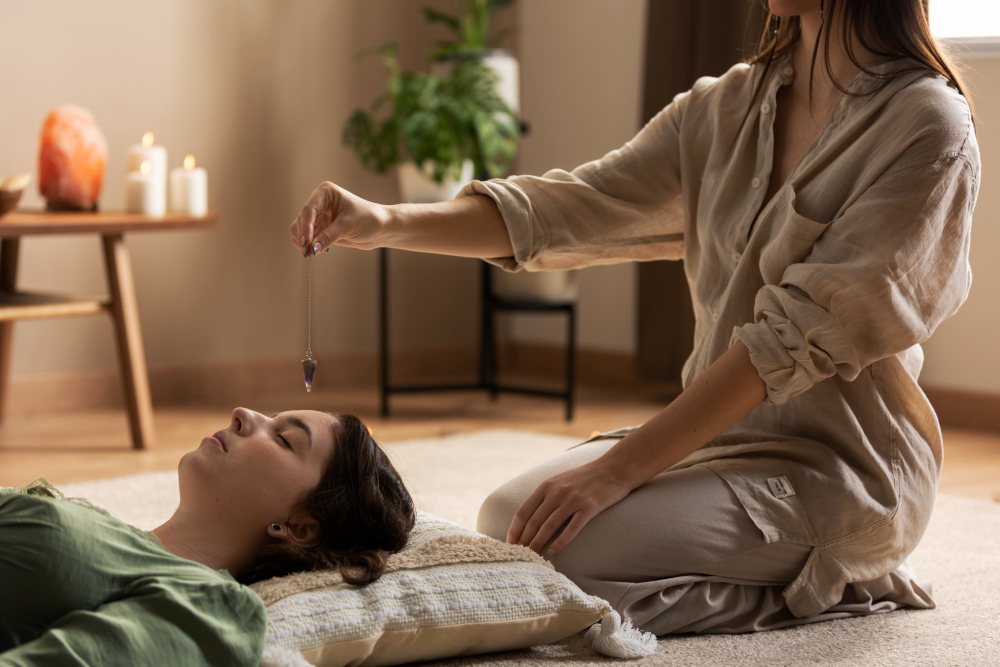
One of the most well-known forms is Reiki, a Japanese technique for stress reduction and relaxation. During a session, you simply lie down fully clothed while a practitioner gently places their hands on or just above your body in various positions. The belief is that they are channeling a universal life force energy to help clear stagnation. While the concept may sound abstract, many people report feeling a soothing warmth, a profound sense of peace, and a release of tension they didn’t know they were holding.
Another ancient practice that works with the body’s energy is Acupuncture. Rooted in Traditional Chinese Medicine, this method involves inserting extremely thin needles into specific points along the body’s energy pathways, or “meridians.” Unlike the broad, gentle nature of Reiki, acupuncture is more targeted, aiming to stimulate these points to get energy moving freely again. For those nervous about needles, the sensation is typically a dull ache or a slight tingle, not sharp pain.
Though their methods are different – one using gentle touch and the other using fine needles – both Reiki and Acupuncture share a common goal: to restore flow and balance. The result for many is a significant reduction in the body’s stress response, leading to a feeling of deep calm and emotional resilience.
Can Creative Therapies Help When Words Aren’t Enough?
Sometimes, the hardest part of navigating a difficult emotion is trying to explain it. When words feel inadequate or you’re simply tired of talking, creative therapies offer a different path to release and understanding. Art therapy, for instance, uses mediums like paint, clay, or simple crayons as a tool for emotional expression. The most important thing to know is that you don’t need any artistic skill. The goal isn’t to create a masterpiece; it’s to give form to your feelings, turning a knot of anxiety into a scribble or the weight of sadness into a piece of molded clay. This process can be a powerful and supportive outlet, especially when dealing with feelings tied to depression or grief.
In a similar way, sound healing bypasses the analytical mind by using vibration to promote deep relaxation. One of the most common experiences is a “sound bath,” where you simply lie down and let the resonant tones of instruments like crystal singing bowls, gongs, and chimes wash over you. It’s not about listening actively, but about feeling the vibrations move through your body. For those who find traditional meditation challenging, a sound bath can be an easier entry point to a state of calm, as the immersive sounds give a busy mind a gentle anchor.
Ultimately, both art and sound-based approaches provide valuable, natural remedies for emotional distress by allowing you to process feelings without having to verbalize them. They create a space to connect with yourself on a deeper level, offering comfort when talking feels like too much. But with these different paths available – from energy work to creative expression – how do you begin to figure out which one is right for you?
How Do I Know Which Alternative Therapy Is Right for Me?
Navigating the landscape of complementary therapies for mental health can feel overwhelming, but the most important guide is you. There isn’t a single “best” therapy, only the one that best fits your unique needs and comfort level. The goal of choosing a therapy isn’t to find a perfect solution, but to discover a path that feels resonant and supportive for where you are right now.
To help you gain clarity and find a starting point, take a moment to reflect on these questions. They can point you toward an approach that aligns with your personal style.
Questions to Ask Yourself:
- Am I more comfortable with a hands-on approach (like Reiki or Acupuncture) or a hands-off one (like a sound bath or talk-based somatic therapy)?
- Do I often feel my emotions physically in my body (e.g., a tight chest, stomach knots)?
- Do words fail me when I try to describe what I’m feeling?
- Am I looking for a technique I can practice on my own (like EFT Tapping)?
Your answers are simply clues, not a prescription. The most powerful tool in this process is your own intuition. Pay attention to which therapies spark your curiosity or give you a sense of hope – that feeling is often a sign you’re on the right track. Once an approach feels promising, the next step is finding a safe and qualified guide.
What Are the 5 Critical Questions to Ask Any Practitioner?
Finding the right person to guide you is just as important as choosing the right therapy. Since many complementary therapies for mental health exist outside of traditional medical regulation, your most powerful tool is being an informed and empowered client. Asking thoughtful questions upfront helps ensure a practitioner is qualified, professional, and a good personal fit for you. It’s a crucial step in building a foundation of trust and safety.
To help you feel confident, here are five essential questions to ask any potential practitioner, often during a brief, introductory phone call:
- What is your training, certification, and experience with this specific method?
- Can you describe what a typical first session would look like?
- How do you ensure a client feels safe and comfortable, especially if difficult emotions come up?
- What are your fees, session length, and cancellation policies?
- Do you offer a brief, free consultation call to see if we’re a good fit?
A practitioner’s answers – and their attitude while answering – are revealing. Be cautious of anyone who guarantees a “cure,” pressures you to commit to expensive packages upfront, or seems dismissive of your concerns. The consultation call is your chance to notice how you feel talking to them. Do you feel respected, heard, and at ease? A safe therapeutic relationship is the bedrock of any effective healing work, so trust your intuition.
Your Next Step: Taking the First Gentle Step Towards Mind-Body Wellness
Before, you may have seen difficult emotions as problems to be solved with your mind alone. You can now recognize that your body is a key part of the conversation, constantly sending signals about your inner world. This shift opens the door to a more holistic approach to mental wellness, one that doesn’t just ask, “What am I thinking?” but also, “What am I feeling, and where?”
You don’t need to be an expert to explore this connection. The benefits of mindfulness-based therapy can start small. The next time you feel a wave of stress, try using breathwork to regulate your emotions: take one slow, deep inhale and simply notice where you feel it. This small act of attention is a powerful way to begin listening to what your body needs.
The therapies you’ve discovered are tools for tuning into this inner wisdom. Your journey toward feeling more grounded and at ease doesn’t have to wait for an appointment; it can start right now, with your very next breath. You’ve already taken the most important step – opening your mind to the possibility.