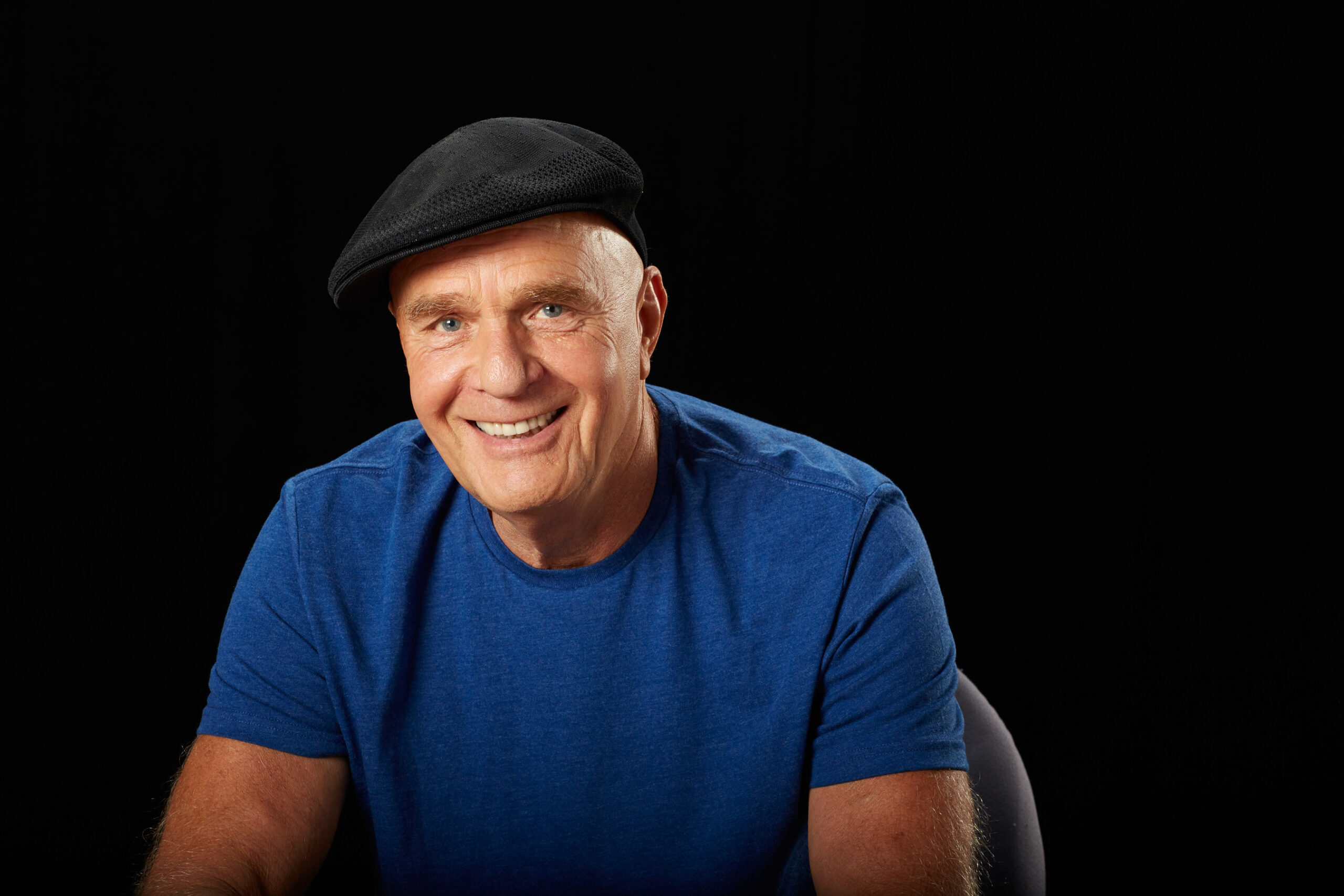

Who Was Wayne Dyer? The Life Behind the Message
There is a certain kind of teacher whose biography becomes inseparable from their teachings. The life itself becomes the lesson. Wayne Walter Dyer was one of those rare figures — a man who did not simply write about transformation from the comfort of an armchair, but who walked every inch of the road he described, from a childhood marked by abandonment to a career that would eventually reach tens of millions of people.
A Beginning Without a Father
Wayne Dyer was born on May 10, 1940, in Detroit, Michigan. Within months of his birth, his father, Melvin Lyle Dyer, abandoned the family entirely. His mother, unable to care for her three boys alone, surrendered them to a series of foster homes and orphanages. Dyer spent much of his early childhood in the Grosse Pointe Home for Boys, moving between different households, never quite finding a stable ground beneath his feet. By conventional measures, this was a childhood designed to produce a broken adult — resentful, limited, defined by what was missing.
What actually happened was something far more interesting. Dyer would later describe those years not as wounds that never healed, but as the very soil from which his deepest insights grew. The experience of abandonment, he said, taught him early that the external world could not be trusted to provide him with a sense of worth or belonging. That sense had to come from somewhere inside. This was not a conclusion he reached quickly. It took decades — and one extraordinary confrontation with his absent father — to fully understand it.
From Detroit to the Navy to Academia
After leaving the orphanage system, Dyer graduated from Denby High School in Detroit and enlisted in the United States Navy, serving from 1958 to 1962. He then pursued his education with a focused seriousness, earning a bachelor’s degree in education from Wayne State University and later a doctorate in counseling from Wayne State University as well. He went on to become a professor of counseling at St. John’s University in New York City, where he built a career that, on paper, appeared entirely conventional.
But Dyer was never quite satisfied with conventional. He was already writing, already turning over ideas in his mind that didn’t fit neatly inside an academic framework. He was interested not just in why people suffered, but in why suffering seemed so stubbornly unnecessary — why human beings clung to limitations that weren’t actually real.
The Book That Changed Everything
In 1976, Dyer published Your Erroneous Zones, a book arguing that most psychological suffering stems not from external circumstances but from irrational, habitual thinking patterns. The argument was not entirely new — cognitive therapy had been making similar claims in clinical settings — but Dyer’s voice was different. He wrote with warmth, with humor, with an almost infectious insistence that freedom was genuinely available to ordinary people right now, not after years of therapy.
The book did not take off immediately. Dyer, still a largely unknown academic, made a decision that revealed something fundamental about his character: he loaded copies of the book into the trunk of his car and drove across America, appearing on local radio stations, calling in to talk shows, walking into bookshops and asking managers to give him a chance to speak. The grassroots effort worked. Your Erroneous Zones eventually sold more than 35 million copies and became one of the bestselling self-help books in history. Dyer left his university position and never looked back.
The Pilgrimage to the Graveyard
There is one story from Dyer’s life that he returned to again and again, because it contains the seed of everything he would later teach. In 1974, he drove to a graveyard in Biloxi, Mississippi — the place where his absent, alcoholic father had died a broken man some years earlier. He stood at the grave and, by his own account, released the anger and resentment he had carried for thirty years. He wept. He spoke aloud. And when he walked away, something had shifted permanently.
“When you change the way you look at things, the things you look at change.” This was not yet his famous mantra; it was simply a private realization, standing over a grave in Mississippi. But the insight that forgiveness was not something you did for someone else — that it was something you did for yourself, to free yourself — became the foundation of everything that followed.
From Self-Help to Spiritual Teaching
Dyer’s evolution as a writer and teacher followed a trajectory that surprised some early readers. Your Erroneous Zones was fundamentally a psychological text. But as years passed, Dyer moved toward increasingly spiritual terrain, studying A Course in Miracles, the Tao Te Ching, Rumi, Patanjali, and the teachings of Sri Nisargadatta Maharaj. He stopped positioning himself as a therapist dispensing practical tools and began speaking openly as someone who had touched something he called Source, God, or the infinite field of intelligence underlying all of reality.
This shift alienated a portion of his audience. It attracted millions more. By the 1990s and 2000s, Dyer had become one of the most prominent voices in what is loosely called the New Age or contemporary spirituality movement — not through dogma or doctrine, but through the consistent, personal, often deeply vulnerable way he shared his own ongoing awakening. He spoke about his battles with alcohol, about the dissolution of his marriages, about the humility required to keep learning and unlearning throughout an entire life.
The Final Chapter
Wayne Dyer died on August 29, 2015, at his home in Maui, Hawaii. He was 75 years old. He had been living with leukemia, though his death, according to those close to him, came peacefully, in his sleep. His body of work — more than 40 books, dozens of audio programs, countless public television specials — remained exactly what he had always intended it to be: an open invitation to anyone who suspected that life could be approached differently. “You don’t need to be better than anyone else,” he once wrote. “You just need to be better than you used to be.”
What made Wayne Dyer worth studying was not that he had all the answers. It was that he kept asking the right questions, out loud, in public, for fifty years. And in doing so, he gave a great many people permission to start asking those questions for themselves.