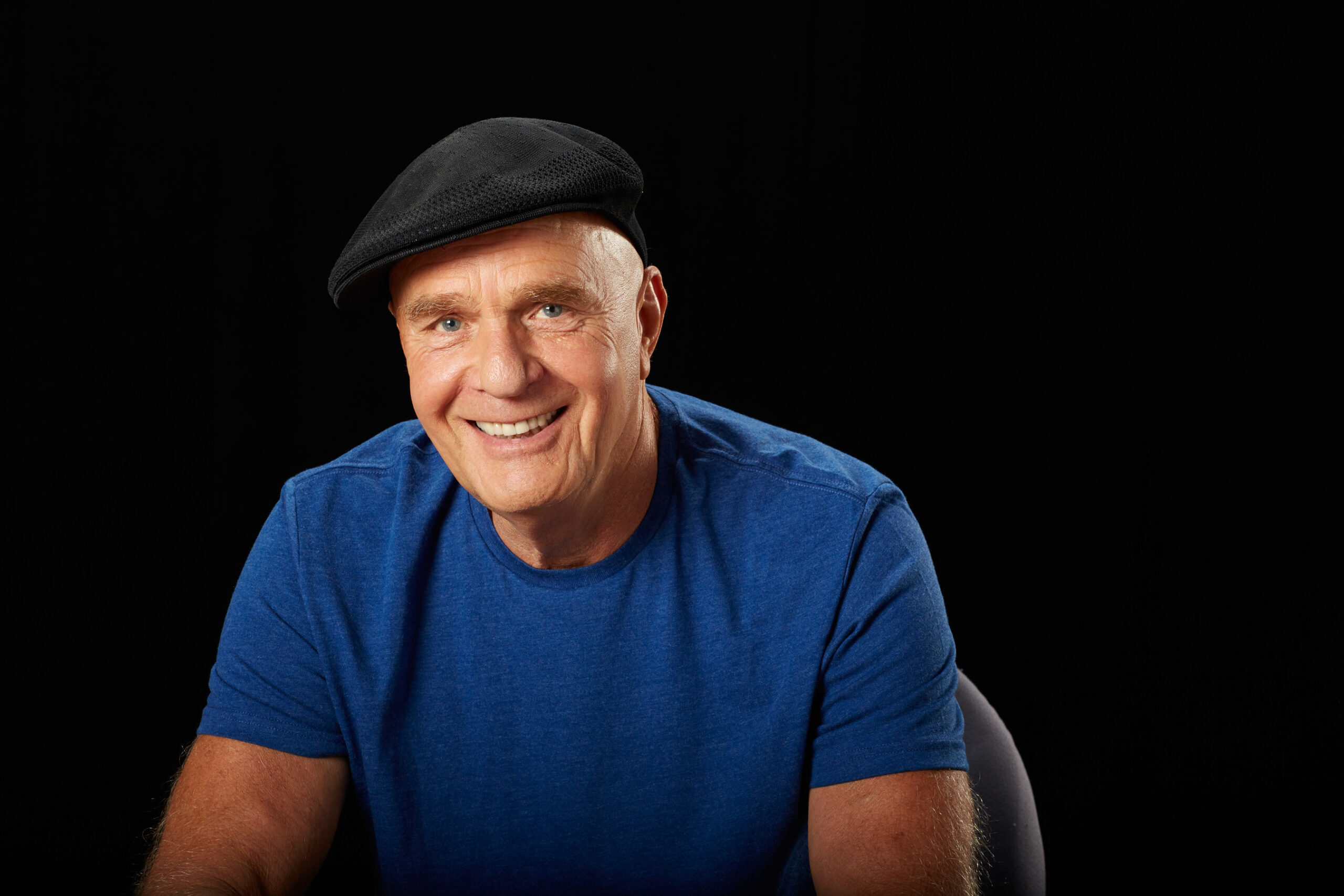

Wayne Dyer & Non-Attachment and the Tao
Water doesn’t argue with the shape of the riverbed. It doesn’t insist on going uphill, doesn’t resist the boulder in its path, doesn’t mourn the direction it couldn’t take. It simply moves – finding the lowest point, the path of least resistance, arriving at the ocean with a kind of effortless certainty that no amount of force could replicate. This image sits at the very heart of what Wayne Dyer spent the later years of his life teaching, after setting aside much of the motivational language of his earlier work and turning, quietly and completely, toward the ancient Chinese text known as the Tao Te Ching.
The shift was not cosmetic. Something in Dyer had genuinely changed – a softening, a deepening, a willingness to stop striving even in his teaching about striving. What emerged was some of the most mature and quietly radical wisdom of his career.
Discovering the Tao
Dyer’s encounter with the Tao Te Ching – the foundational text of Taoism, attributed to the sage Lao Tzu and written roughly 2,500 years ago – became one of the defining chapters of his later life. He spent a year immersed in its 81 verses, eventually producing his own translation and commentary in the book Change Your Thoughts, Change Your Life. He described the process as transformative not just intellectually, but personally. The Tao didn’t give him new information. It reminded him of something he had forgotten.
The central idea of the Tao is both simple and bottomless: there is a natural way of things, an underlying order to the universe, and when you move in alignment with it, life flows. When you resist it – when you impose, force, manipulate, and demand – you create friction. Not because the universe is punishing you, but because you are swimming against a current that has no reason to reverse itself for your convenience.
Dyer translated this insight through the concept of wu wei – a Taoist principle often rendered as “non-doing” or “effortless action.” It doesn’t mean passivity or indifference. It means acting from a place so aligned with what is natural and true that the action feels less like effort and more like expression. A master calligrapher doesn’t fight the brush. A great musician doesn’t battle the melody. They move with something, not against it.
The Trap of Other People’s Lives
Perhaps the most practically challenging dimension of this teaching concerns the people around you. Dyer was unequivocal about it: one of the greatest sources of suffering in human life is the habit of needing other people to be different from who they are.
You know this habit. It shows up as the low-grade frustration with a partner who doesn’t communicate the way you do, the irritation with a family member who makes choices you wouldn’t make, the silent resentment toward a friend who doesn’t seem to grow at the pace you think they should. These reactions feel justified. They feel like standards, like caring, like wisdom. But Dyer pointed out something uncomfortable – they are a form of control dressed up as concern.
“The Tao that can be named is not the eternal Tao,” Lao Tzu wrote, suggesting that the deepest truth always exceeds what the thinking mind can package and define. In the same way, every person you encounter is more than your idea of them. They are a living, unfolding expression of the same Source that created you – moving through their own lessons, their own timing, their own path. When you decide that their path should look like your path, you have stopped relating to them and started relating to a projection.
Dyer’s invitation was radical in its simplicity: practice allowing. Allow others to be exactly who they choose to be, without requiring that choice to satisfy your expectations. This isn’t indifference – you can still love deeply, speak honestly, hold boundaries firmly. But underneath all of that, there can be a fundamental release of the need to control the outcome of another person’s life.
Non-Attachment Is Not Indifference
It’s worth pausing here, because non-attachment is one of the most misunderstood concepts in spiritual teaching. It gets conflated with emotional distance, with not caring, with a kind of cold transcendence above human experience. That is not what Dyer – or the Tao – was pointing at.
“You cannot be lonely if you like the person you’re alone with,” Dyer once said, and that line reveals something important: the teaching of non-attachment is ultimately about wholeness. When you are not dependent on external circumstances – on other people’s behavior, on outcomes unfolding exactly as planned, on the world conforming to your map of how it should be – you become genuinely free to engage with life as it is, rather than as you wish it were.
This is the paradox at the center of Taoist wisdom: the less you grasp, the more you receive. The less you need things to be a certain way, the more you notice the rightness of the way they already are. Non-attachment doesn’t remove you from life. It lets you be fully present to it, without the distortion of constant wanting and resisting.
Research in contemporary psychology supports this ancient insight more than we might expect. Psychologist Shelly Gable’s work on relationships has consistently shown that the quality of our close connections depends less on what our partners do and more on how we respond – particularly in moments of uncertainty and difference. The capacity to allow, rather than control, is not just a spiritual ideal. It turns out to be a psychological one as well.
Returning to Simplicity
The Tao Te Ching repeatedly returns to one image above all others: the uncarved block of wood, which Lao Tzu calls pu. In its natural, unworked state, the block contains every possible shape. The moment you begin carving, you gain one form but lose all the others. Dyer read this as a metaphor for the conditioned self – the identity built up through years of approval-seeking, achievement-chasing, and role-playing – and contrasted it with the original self, the one that existed before the world started telling you who to be.
Returning to simplicity, in Dyer’s reading of the Tao, doesn’t mean abandoning ambition or retreating from the world. It means loosening your grip on the story you’ve been telling about yourself and others. It means spending more time in the quiet, unornamented present – where the Tao actually lives – and less time in the mental theater of how things should have been or what they need to become.
The river doesn’t push. And eventually, it reaches the sea.