
Can You Be a Spiritual Person Without Religion?
“Spiritual but not religious” has become such a common phrase that it barely raises an eyebrow anymore, a tidy label for people who want the depth of inner life without the architecture that traditionally housed it. The question underneath that phrase deserves more care than the label usually receives. Religion, for all the baggage attached to the word, is not simply an obstacle standing between a person and their own awakening. It can also be one of the most sophisticated technologies for inner development that human beings have ever built, and dismissing it outright can mean walking past centuries of refined wisdom without ever glancing at what it holds.
Religion as an Inherited Map
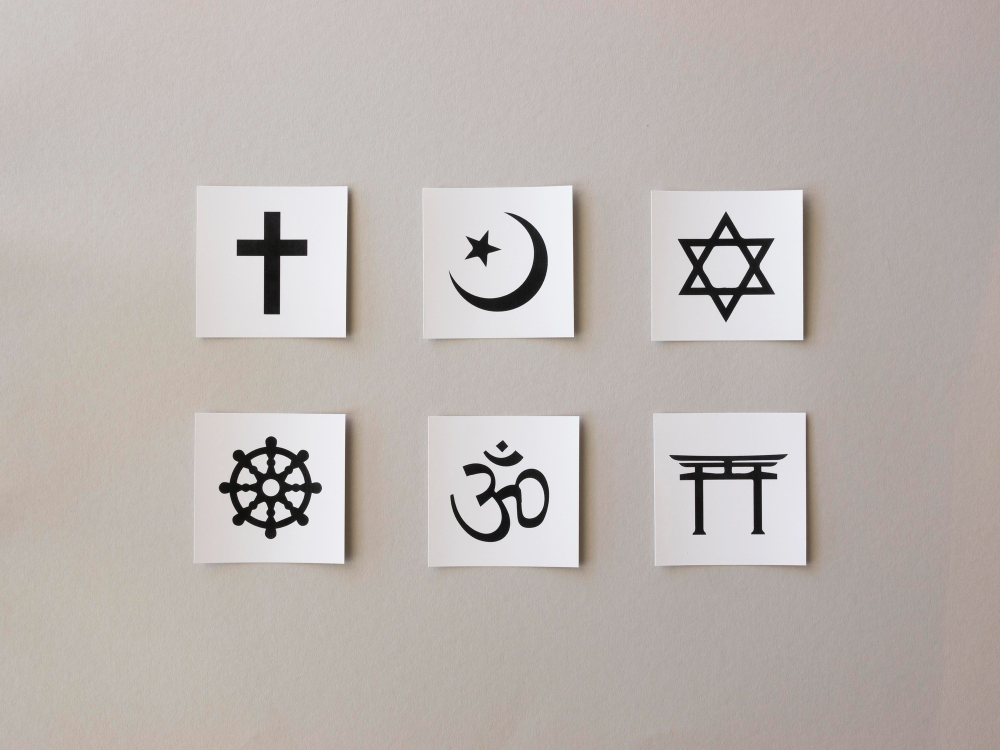
Every major religious tradition, whatever else it is, functions as an accumulated map of the inner life, tested and revised across countless generations of practitioners who took the terrain seriously. The rituals, the fasting, the scriptures, the seasonal observances, none of these were invented arbitrarily. They emerged from real people encountering the same obstacles you encounter now, restlessness, grief, ego, longing, and refining a structure that reliably moved others through them. William James, one of the first scholars to treat religious experience as a legitimate psychological phenomenon in his landmark study The Varieties of Religious Experience, put it directly: “the best fruits of religious experience are the best things that history has to show.” You do not have to accept every metaphysical claim a tradition makes to recognize the sophistication of the path it has carved.
The People You Meet Along the Way
There is a second, quieter benefit that rarely gets mentioned alongside doctrine and ritual: the community itself. Walk into any long-standing religious congregation and you will likely meet someone who has survived something you have not yet faced, an elder who buried a spouse and kept showing up, a mentor who has spent forty years quietly practicing what they preach. Their wisdom rarely arrives as a lecture. It shows up sideways, in how they carry a hard week, how they forgive, how they sit with uncertainty without needing to resolve it immediately. This kind of transmission, character teaching by proximity rather than instruction, is one of the genuine gifts organized religion still offers, and it is difficult to manufacture outside of a committed community.
The Seeker Who Collected Every Tradition
Durek Verrett, known publicly as Shaman Durek, offers an unusually visible example of someone who took this approach to an extreme. Rather than settling into a single tradition, he has spent decades moving through many at once, describing his own practice as drawing on Christian teaching, Islamic and Sufi traditions, Jewish study of the Torah and Kabbalah, the Bhagavad Gita, Buddhist practice, and African spiritual lineages passed down through his family. His life illustrates something genuinely appealing about treating religions as a shared library rather than a single membership: each tradition holds a different lens, and moving between them can widen your understanding of what any of them are actually pointing toward. It is worth saying plainly, though, that Verrett has also become a deeply controversial figure, criticized by journalists and commentators for statements that stray well outside any tradition’s accountability, a pattern worth keeping in mind as you read the next section.
Where the Traps Actually Are
Religion at its best offers a map, a community, and a discipline. Religion at its worst offers a costume for control. The traps rarely announce themselves as traps. They tend to look like certainty, a leader or text that claims to have resolved every question so thoroughly that doubt itself becomes a symptom to be treated rather than a normal part of any honest inquiry. They look like guilt used as a steering wheel, obedience mistaken for devotion, and hierarchies where questioning the person at the top gets treated as questioning the divine itself. They also look like spiritual bypassing, using scripture or ritual language to avoid the plain emotional work a situation actually calls for. None of these patterns are unique to religion; they surface in secular self-help circles and wellness communities just as easily. But because religious authority often carries the extra weight of claiming to speak for the divine, its traps can be harder to question and slower to recognize from inside.
Building the Path Without Any of It
None of this means religion is required. Jiddu Krishnamurti built an entire teaching career on the opposite premise, famously dissolving the organization built to crown him a spiritual authority and declaring that “truth is a pathless land, and you cannot approach it by any path whatsoever.” A spiritual life built with no religious framework at all tends to lean on a different set of tools: sustained meditation or contemplative silence, honest self-inquiry into who is actually doing the thinking behind your thoughts, time spent in nature without an agenda, service to other people that asks nothing in return, and enough solitude to hear what your own mind sounds like without input. What religion provides ready-made, community, ritual, a tested map, you would need to build deliberately on your own. It is entirely possible. It simply asks more of you in the architecture department, since you become responsible for constructing the very structure a tradition would otherwise have handed you.
Choosing What Actually Fits You
The honest answer, then, is that both paths can lead somewhere real. Religion, approached without blind obedience, offers inherited wisdom and human companionship that are difficult to replicate alone. A path without religion demands more self-authored discipline but answers to no authority beyond your own direct experience. Neither route guarantees awakening, and neither one is inherently safer than the other. What matters most is not which map you choose but whether you stay awake enough, inside either one, to notice the difference between a path that is opening you and one that has quietly begun to close you down.