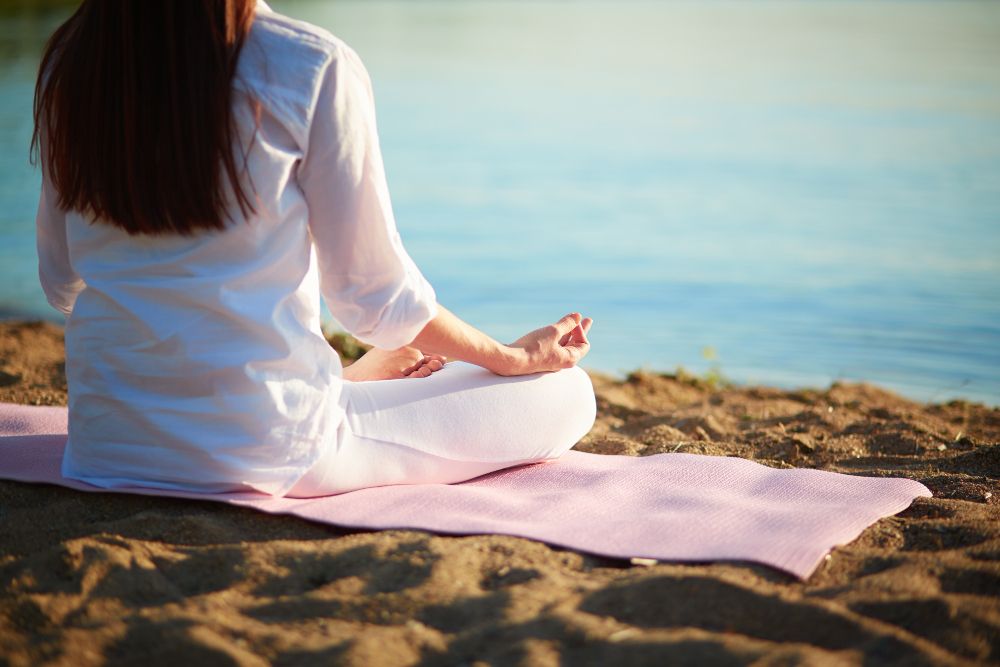

How Meditation Builds Your Spirituality
Meditation is often imagined as something mysterious: a monk sitting motionless on a mountain, a mind emptied of thoughts, or a spiritual technique reserved for the enlightened few. Yet meditation is neither an escape from life nor a performance of perfection. It is not about suppressing thoughts, forcing calmness, or becoming someone spiritually impressive. Meditation is not withdrawal from reality – it is intimacy with reality. At its essence, meditation is conscious presence. It is the deliberate act of turning attention inward and witnessing experience as it unfolds: thoughts arising, emotions moving, sensations appearing and dissolving. You are not trying to stop the mind; you are learning to see it clearly.
Meditation is awareness recognizing itself.
When you meditate, nothing new is added to you. Instead, layers fall away – conditioning, identification, unconscious reactions. What remains is something deeply familiar yet rarely noticed: the silent awareness behind experience. Meditation is not about becoming spiritual. It is about discovering that the depth you seek has always been present.
Mindfulness as the Gateway to the Higher Self
As explored in previous reflections, mindfulness and presence are the doorway to what many traditions call the Higher Self. Mindfulness is the moment you step out of automatic living and begin to observe rather than react. Meditation deepens this doorway. If mindfulness is the threshold, meditation is the path that leads inward.
You can read hundreds of spiritual books, listen to inspiring teachers, and intellectually understand profound truths – yet without meditation, these insights often remain conceptual. They live in the mind but do not transform your being. Meditation becomes the bridge between knowledge and realization. You may understand forgiveness intellectually, yet still feel resentment. You may believe in unity, yet experience separation. Meditation slowly dissolves this gap. It moves spirituality from philosophy into lived experience.
This is why meditation can be called a spiritual gym. Just as muscles grow through repeated training, awareness strengthens through consistent practice. Each time you return to the breath, notice a thought without chasing it, or remain present with discomfort, you are training consciousness itself. Transformation does not happen because you think differently; it happens because you learn to see differently.
Meditation as the Bridge Between Theory and Experience
Many seekers remain collectors of wisdom. They read sacred texts, attend workshops, discuss enlightenment – yet something feels unchanged. The inner world continues operating through the same fears, habits, and emotional patterns. Meditation interrupts this cycle. In meditation, ideas are tested against direct experience. You discover that the mind never stops talking. You see how identity forms around thoughts. You notice how emotions arise without permission. Suddenly spirituality becomes empirical – not in a scientific sense, but in an experiential one. You are no longer believing teachings; you are verifying them.
This is why meditation is indispensable in inner development. Without practice, spiritual growth easily becomes spiritual entertainment – inspiring but temporary. Meditation anchors insight into the nervous system. It rewires perception. The teachings stop being something you admire and become something you embody.
Meeting the Observer and the Ego
One of the most profound discoveries meditation offers is the distinction between the Observer and the Ego. At first, you believe you are your thoughts. When the mind says, “I am anxious,” you feel anxious. When it says, “I am not enough,” you believe it. Meditation introduces a subtle but revolutionary realization: thoughts are events appearing within awareness, not definitions of who you are. You begin to notice that something in you watches the thinking.
This witnessing presence – the Observer – remains unchanged while thoughts, emotions, and identities shift constantly. The Ego, then, is revealed not as an enemy but as a psychological structure: a collection of memories, defenses, and narratives designed to navigate the world. Meditation does not destroy the ego; it puts it in perspective. You discover that you have an ego but are not limited to it. This recognition brings freedom. Reactions slow down. Emotional storms pass more quickly. You stop taking every inner movement personally. Gradually, the question “Who am I?” stops being philosophical and becomes experiential.
Hearing Intuition, Soul, and the Divine
Most people are not disconnected from intuition because it is absent; they are disconnected because their inner noise is too loud. Meditation lowers the volume of mental chatter. In silence, subtler forms of intelligence emerge – intuitive knowing, creative insight, inner guidance. What once felt like vague impressions becomes clear direction. You begin to sense decisions rather than overthink them.
Across spiritual traditions, this inner voice has been called the soul, higher consciousness, divine guidance, or the whisper of God. Meditation does not create this connection; it removes interference. Prayer is often speaking to the Divine. Meditation is listening.
In deep stillness, many practitioners report moments of profound unity – a sense that the boundary between self and existence softens. These experiences cannot be forced, yet meditation prepares the ground for them. Silence becomes a meeting place between the human and the sacred.
Meditation Across Spiritual Traditions
Although meditation is frequently associated with Eastern spirituality, nearly every great religious tradition developed its own contemplative practices. The forms differ, but the intention remains the same: returning awareness to its source.
Buddhism and Hinduism – The Cradle of Meditation
In Hinduism and Buddhism, meditation was refined into systematic paths of awakening. Ancient yogic traditions described meditation as a means of realizing the true Self beyond illusion. Practices such as dhyana, pranayama, and mantra meditation were designed to stabilize attention and transcend identification with the mind. Buddhism emphasized direct observation of experience through practices like Vipassana and Zen meditation. Rather than seeking union with a divine identity, practitioners investigated impermanence, suffering, and non-self. Through sustained awareness, insight naturally emerged.
Both traditions recognized a central truth: liberation is not achieved through belief but through disciplined awareness. Meditation became the laboratory of consciousness.
Contemplative Paths in Christianity, Sufism, and Judaism
Western traditions preserved meditation in forms often overlooked today. In Christianity, practices such as Lectio Divina invited practitioners into slow, contemplative reading of sacred texts, allowing scripture to become an inner dialogue rather than intellectual study. The rosary, through rhythmic repetition, functions as a mantra practice that quiets the analytical mind and opens the heart.
Sufism, the mystical dimension of Islam, developed practices like Dhikr – repetitive remembrance of the Divine Name – and Muraqaba, a form of silent contemplation aimed at experiencing closeness with God. These practices dissolve the sense of separation through devotion and presence.
In Judaism, especially within Kabbalistic traditions, meditation involved visualization of Hebrew letters, sacred names of God, and contemplative concentration designed to align human consciousness with divine creation. These systems recognized sound, symbol, and attention as transformative forces.
Different languages, same intention: awakening awareness.
Meditation and the Energy Body
Beyond psychological transformation, many spiritual traditions describe meditation as an energetic process. As attention stabilizes, the body’s subtle energy systems begin to harmonize. Practitioners often experience warmth, vibration, emotional release, or a sense of openness in the chest or spine. Within yogic frameworks, meditation balances chakras – energetic centers associated with emotional and spiritual functions. In Eastern healing traditions, it supports the flow of life force through meridians, restoring energetic coherence.
Whether interpreted metaphorically or literally, the experiential reality is clear: meditation regulates the nervous system and releases accumulated tension stored in the body. You begin to feel more aligned, less fragmented. Healing occurs not because meditation forces change, but because it allows blocked energy – emotional and psychological – to move again. Stillness becomes medicine.
Meditation as Shadow Integration
A common misunderstanding is that meditation exists to make you feel peaceful all the time. In truth, meditation often brings discomfort before peace.
When external distractions fade, unresolved emotions surface. Old fears, grief, anger, and memories may arise unexpectedly. This is not failure; it is integration. Meditation illuminates the shadow – the rejected or unconscious parts of the psyche described in modern psychology and echoed in spiritual traditions worldwide. Instead of escaping pain, you learn to sit with it without resistance. This requires courage.
You discover that healing does not come from avoiding darkness but from meeting it with awareness. Meditation becomes a safe container in which suppressed experiences can be felt and released. Over time, compassion toward yourself deepens because you see the mechanisms behind your reactions. You stop fighting yourself and begin understanding yourself. Peace then emerges not as avoidance of suffering, but as intimacy with the whole of your being.
Can Enlightenment Happen Without Meditation?
Stories exist of sudden awakening – moments of Satori, spontaneous realizations where separation dissolves instantly. Such events do occur, yet they resemble winning a spiritual lottery: unpredictable and rare. For most seekers, awakening unfolds gradually through practice.
There are spiritual paths that appear to bypass seated meditation. Bhakti Yoga emphasizes devotion and surrender through love of the Divine. Karma Yoga transforms daily action into spiritual practice through selfless service. Jñana Yoga follows inquiry and deep philosophical investigation into the nature of the self. Yet when examined closely, each of these paths becomes a form of living meditation. In Bhakti, attention rests continuously on the beloved. In Karma Yoga, presence infuses every action. In Jñana Yoga, awareness relentlessly observes the sense of “I”. The posture may change, but the essence remains sustained awareness.
Seated meditation serves as the training ground. It is where you first learn stability, clarity, and witnessing. Without this foundation, active spiritual paths often revert to unconscious habit rather than conscious practice. Meditation teaches you how to be present – and then life itself becomes meditation.
The Quiet Revolution Within
Meditation does not promise perfection, constant bliss, or escape from human challenges. What it offers is subtler and far more transformative: a shift in identity. You begin to live less as a collection of reactions and more as conscious presence. You respond instead of react. You listen more deeply. You sense meaning beneath ordinary moments.
Gradually, spirituality stops being something you pursue and becomes the way you experience existence itself. The separation between practice and life dissolves. Washing dishes, walking, working, loving – all become expressions of awareness. And perhaps this is why meditation has endured across centuries and cultures. It does not belong to any religion or philosophy. It belongs to consciousness discovering itself through you. You sit, you breathe, you observe – and slowly, quietly, you remember who you are.