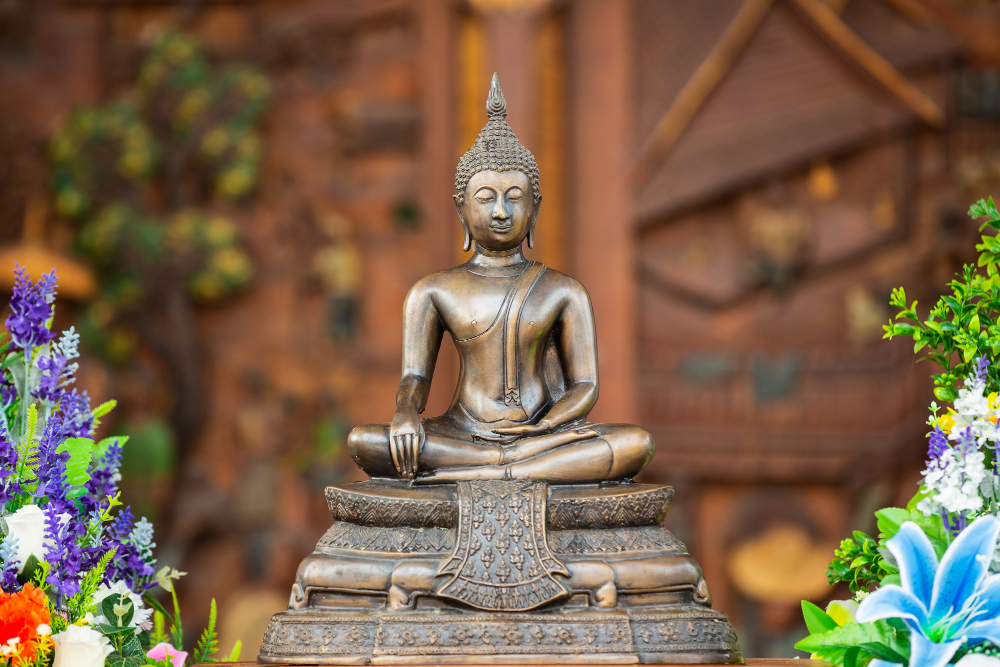

The path to enlightenment according to Buddhism
When you speak of enlightenment in Buddhism, you are not speaking about becoming special, superior, or distant from ordinary life. You are speaking about waking up from the trance of confusion. The path is not about escaping the world, but about seeing it clearly, without the distortions of craving, fear, and ignorance. As you walk this path, you are not trying to become someone else. You are learning to see what has always been here, hidden beneath habit and illusion.
Understanding the nature of suffering
The Buddha taught that suffering is not limited to dramatic pain or visible tragedy. It also includes the subtle unease that lingers beneath pleasure, the quiet anxiety that nothing truly lasts, and the feeling that something is always missing. You recognize this when satisfaction fades quickly, when desire renews itself, or when fear arises at the thought of loss.
By looking honestly at this pattern in your own life, you begin the journey toward awakening. Instead of blaming circumstances or other people, you start to see the deeper root: attachment to what is unstable. This realization is not meant to burden you. It is meant to open a door.
Seeing impermanence as a teacher
Everything you experience is changing. Your thoughts shift, emotions transform, body ages, relationships evolve. When you resist this flow, you suffer. When you learn to observe it with openness, impermanence becomes a source of wisdom rather than a cause of fear.
As your awareness deepens, you begin to understand that clinging to fixed identities or outcomes creates unnecessary tension. Enlightenment grows when you allow life to unfold without constantly trying to control it.
Cultivating right view and right intention
On the Buddhist path, awakening rests on clarity and ethical awareness. You train yourself to see reality as it is, not as your desires or anxieties paint it. This is right view: understanding cause and effect, recognizing how actions shape experience, and trusting that freedom from suffering is possible.
From this understanding, right intention arises naturally. Instead of acting from greed, resentment, or confusion, you cultivate motivations rooted in compassion, goodwill, and renunciation of harm. This is not about striving for moral perfection. It is about aligning your heart with a deeper truth about interconnectedness and responsibility.
Training the mind through meditation
Meditation is not an escape from daily life. It is a disciplined way of studying your own mind. As you sit in stillness, you observe how thoughts arise, linger, and fade. You notice how emotions come and go, often without your conscious choice.
Through this practice, you gradually realize that you are not identical with your mental patterns. You gain space between awareness and reaction. This space brings freedom. Over time, your mind becomes steadier, less driven by impulse, and more capable of responding with wisdom rather than habit. In this clarity, glimpses of awakening naturally appear.
Compassion as the heart of enlightenment
True awakening does not lead to cold detachment. It opens the heart. As you see through the illusion of a separate, isolated self, you begin to feel the shared vulnerability of all beings. Your own suffering becomes a bridge to understanding the suffering of others.
This insight changes how you live. You speak more carefully and act with greater sensitivity, you become less focused on proving yourself and more focused on alleviating harm. Enlightenment expresses itself not in dramatic displays, but in quiet, consistent compassion.
Learning directly from the teachings of the Buddha
The Buddha emphasized a path grounded in direct experience rather than blind belief. He encouraged inquiry, personal verification, and responsibility for one’s own awakening. His teachings on the Four Noble Truths and the Eightfold Path offer a practical framework for understanding suffering, its causes, its cessation, and the way toward freedom.
What makes his guidance enduring is its realism. He did not promise instant transcendence or mystical escape. He pointed instead to disciplined practice, ethical living, and deep insight into the nature of mind and reality. You are invited not to worship his words, but to test them in your own life and discover their truth through lived experience.
Enlightenment as an ongoing practice
The Buddhist path is rarely a single dramatic breakthrough. It is more often a gradual unfolding of awareness, humility, and compassion. Some days you feel clear and present. Other days old habits return. This rhythm is not a sign of failure. It is part of the human process of waking up.
What matters is your willingness to return—to mindfulness, to honesty, to kindness, to understanding. Each moment offers a fresh opportunity to see more clearly. Each breath becomes a quiet reminder that awakening is not a distant achievement, but a living practice.