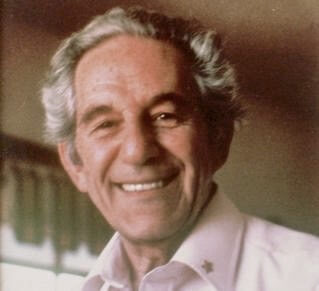

The Sedona Healing Method by Lester Levenson: The Art of Letting Go
Across different spiritual traditions, one insight appears again and again: suffering is not created by life itself, but by the way the mind holds onto experience. In the mid-twentieth century, an American engineer named Lester Levenson arrived at this realization not through monasteries or ancient scriptures, but through a profound personal crisis that transformed his understanding of happiness, identity, and emotional freedom. What later became known as the Sedona Healing Method emerged from his direct exploration of consciousness and the nature of human attachment.
The method proposes something deceptively simple – that emotional suffering persists because feelings are resisted, suppressed, or clung to, and that liberation becomes possible when these inner contractions are gently released. Rather than adding beliefs or techniques, it invites subtraction: letting go.
Lester Levenson’s Awakening: From Collapse to Clarity
You encounter this teaching most meaningfully when you understand the man behind it. Lester Levenson was not originally a spiritual teacher. He was trained in physics and engineering, deeply immersed in analytical thinking. Yet despite material success, his life reached a breaking point when severe health issues and emotional exhaustion led doctors to predict he might not survive long.
Faced with mortality, he turned inward with a radical question: What truly makes a human being happy?
Instead of searching outside himself, he began observing his own mind. He noticed that every moment of suffering was tied to resistance – wanting something different from what was present, or fearing the loss of something desired. Through intense self-inquiry, relaxation, and emotional surrender, he reported profound psychological and physical transformation. His health improved, but more importantly, he described entering a state of lasting peace and joy independent of circumstances.
Levenson did not claim mystical powers or religious authority. His “research,” as he called it, was experiential. He tested emotional release repeatedly within himself and later with students, refining a practical process anyone could apply regardless of belief system.
The Core Insight: You Suffer Because You Hold On
When you first encounter the Sedona Method, its central premise may feel both obvious and revolutionary. You are not disturbed by emotions themselves, but by your attempt to control them. From childhood, you learn subtle strategies of emotional survival. You suppress anger to be accepted. You cling to pleasure to avoid emptiness. You resist fear because it feels unsafe. Over time, these reactions become unconscious habits, forming layers of tension within the body and psyche. Levenson observed that emotions function like energy moving through awareness. When allowed fully, they naturally dissolve. When resisted, they remain trapped.
In Buddhist language, this resembles attachment and aversion. In Hindu philosophy, it echoes the concept of vasanas – stored emotional impressions that shape perception. Modern psychology speaks of repression and emotional conditioning. The Sedona Method stands at the meeting point of these perspectives, translating ancient wisdom into an accessible inner practice. You begin to see that letting go is not passive resignation. It is the release of inner resistance.
Letting Go Is Not Suppression
Many misunderstand emotional release as pushing feelings away. The Sedona Method teaches the opposite. Suppression tightens the psyche; letting go softens it. Imagine holding a clenched fist all day without noticing. Emotional holding works the same way. You are often unaware of how much tension you carry because it has become normal. When you practice this method, you do not analyze endlessly or relive past trauma. Instead, you gently allow the feeling to exist without interference. You welcome it into awareness.
You might notice sadness in your chest or anxiety in your stomach. Rather than asking why, you ask something simpler: Can I allow this feeling to be here? This question shifts your relationship with emotion. You stop fighting experience and begin witnessing it. And something unexpected happens. The emotion moves.
The Three Hidden Wants
Levenson taught that beneath most human behavior lie three fundamental desires: the desire for approval or love, the desire for control or security, and the desire for survival or safety. Nearly every emotional disturbance can be traced back to one of these impulses. You seek validation because you believe it will complete you. You seek control because uncertainty feels threatening. You resist loss because identity seems tied to permanence. Yet through careful observation, you begin to notice that these desires create tension precisely because they depend on external conditions. The more tightly you hold them, the more fragile peace becomes.
The Sedona Method does not ask you to eliminate desire through force. Instead, you gently question your attachment to it. When you release the emotional charge behind wanting, action becomes clearer and freer. You still participate fully in life, but without inner desperation. This mirrors the Bhagavad Gita’s teaching of action without attachment to outcome – engagement without psychological bondage.
Awareness as the True Healer
At the heart of the method lies a profound spiritual insight: awareness itself heals.
You often believe change requires effort, struggle, or improvement. Yet many spiritual traditions suggest transformation occurs through clear seeing. When awareness shines fully on an emotion, it loses its unconscious power. Levenson discovered that emotions dissolve naturally when met with relaxed attention. You are not fixing yourself; you are removing interference with your natural state. In mindfulness meditation, this is called non-attachment. In Advaita Vedanta, it is recognition of the witnessing consciousness. In energy healing traditions, it is allowing blocked energy to flow again.
The Sedona Method bridges these teachings in everyday language. Instead of philosophical abstraction, it gives you a direct doorway into experience. You begin to notice that peace is not something you create. It is what remains when resistance ends.
The Simplicity That Challenges the Mind
Ironically, the greatest obstacle to this practice is its simplicity. The mind prefers complexity because complexity preserves its role as problem-solver. You may find yourself asking whether you are doing it correctly, whether deeper techniques exist, or whether more effort is required. Yet the method continually points you back to ease.
Can you allow this moment as it is?
Can you welcome the feeling instead of pushing it away?
Can you let it go, even slightly?
These questions bypass intellectual analysis and speak directly to experiential awareness. Each time you release even a small contraction, you weaken the habit of psychological resistance. Over time, you discover that emotional freedom is cumulative. Small releases reshape perception itself.
Emotional Freedom and Modern Psychology
Although the Sedona Method arises from spiritual insight, it resonates strongly with contemporary psychological understanding. Research in emotional regulation increasingly shows that acceptance reduces stress responses more effectively than suppression. Trauma therapies emphasize safe emotional processing rather than avoidance. Levenson arrived at similar conclusions decades earlier through self-observation. He noticed that resistance amplified emotional intensity, while acceptance allowed nervous system relaxation. You might recognize parallels with somatic therapy, mindfulness-based stress reduction, or acceptance and commitment therapy. Yet the Sedona approach remains uniquely direct. It does not require long sessions, complex narratives, or identity reconstruction. It works moment by moment.
You meet experience exactly where you are.
The Spiritual Dimension: Beyond Personal Identity
As you deepen the practice, something subtler emerges. Emotional release does not only improve mood; it changes your sense of self. When layers of fear, desire, and resistance loosen, awareness feels more spacious. Thoughts arise and pass without defining you. Emotions become movements within consciousness rather than personal burdens. Levenson described this as discovering your true nature – happiness without cause. This echoes Buddhist awakening, where suffering ends not because life becomes perfect, but because identification with passing phenomena softens. In Hindu teachings, this resembles realization of the Self beyond egoic patterns. You begin to sense that who you are is not the story in your mind, but the awareness witnessing it. And from this recognition, compassion grows naturally. When you no longer fight your own experience, you stop fighting others as well.
Bringing the Practice into Everyday Life
The beauty of the Sedona Method is its portability. You do not need silence, incense, or retreat centers. Life itself becomes the practice.
When frustration appears during work, you notice the tightening and allow it. When jealousy arises, you welcome the sensation instead of judging it. When fear surfaces before a difficult conversation, you feel it fully rather than escaping into distraction. Gradually, emotional reactions lose their automatic grip. You respond instead of react. You may notice relationships becoming lighter. Decisions feel clearer. Creativity increases because mental energy is no longer trapped in resistance. The world does not necessarily change – but your experience of it transforms profoundly.
Letting Go and the Paradox of Effort
One of the deepest teachings embedded in the Sedona Method is paradoxical: you cannot force letting go.
Trying to release emotions aggressively becomes another form of resistance. True release happens through willingness, not control. You learn to approach yourself with gentleness. Even the inability to let go becomes something you allow. In this acceptance, tension gradually dissolves. This reflects a universal spiritual principle: transformation arises through alignment, not struggle. Like water finding its natural flow, consciousness returns to ease when obstruction softens.
A Path for the Modern Seeker
For someone new to spirituality, the Sedona Method offers an accessible entry point. It does not require adopting beliefs, changing religion, or accepting metaphysical doctrines. You simply explore your own experience. Yet beneath its simplicity lies profound depth. Emotional release opens the same doors described by mystics across centuries – freedom from suffering, unity with life, and unconditional peace. You begin with emotions, but you end by discovering awareness itself. And perhaps this is why Lester Levenson’s work continues to resonate. He did not present enlightenment as distant or extraordinary. He suggested that freedom is available in ordinary moments, hidden behind the habit of holding on.
Every feeling becomes an invitation.
Every discomfort becomes a doorway.
Every moment offers the possibility of release.
The Quiet Return to Yourself
As you practice letting go, you may notice something surprising: you are not becoming someone new. You are uncovering what was always present beneath layers of tension. Joy appears without reason. Silence feels alive. Even challenges lose their threatening edge because your peace no longer depends on controlling outcomes.
The Sedona Method ultimately teaches trust – trust in awareness, trust in life’s unfolding, and trust in your capacity to meet experience without fear. You discover that awakening is not an achievement but a remembering. And in that remembering, the search softens. You stop trying to grasp happiness. You allow it.