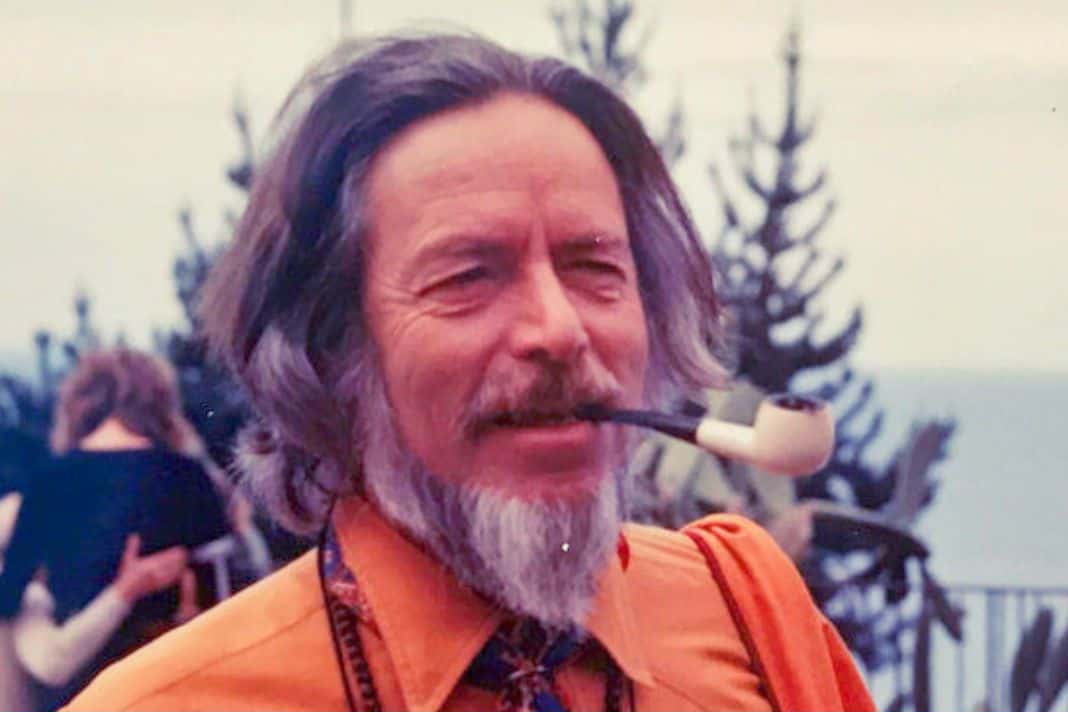

What are Alan Watts’ most important teachings?
You’ve probably heard Alan Watts quoted somewhere, even if you didn’t realize it. He was a British philosopher, writer, and speaker who dedicated his life to translating the ideas of Eastern spirituality into everyday Western language. What made him different was his ability to talk about deep, sometimes abstract ideas in a way that felt playful rather than heavy. Listening to him, you start to feel that philosophy isn’t something distant; it’s something you can breathe into your daily routines, conversations, and the way you see yourself.
Life isn’t a race toward a finish line
One of Watts’s most liberating ideas is that your life is not meant to be treated like a journey with a final destination, where everything you do must somehow “pay off” later. He compares life to music or dance—things you do for the experience itself, not for a climax. When you take this to heart, you stop chasing the “next” thing quite so aggressively. You let yourself inhabit what’s happening right now, even in the small, ordinary moments. It doesn’t mean you stop planning or dreaming; it simply means you stop postponing your sense of being alive.
Flow instead of forcing
Watts loved describing the Taoist concept of wu wei, which has nothing to do with laziness and everything to do with moving in harmony with what’s unfolding. You know those moments when everything feels effortless, when you stop gripping the steering wheel of life so tightly and things somehow go smoother? That’s the spirit of wu wei. It’s less about giving up control and more about recognizing where effort becomes resistance. Ironically, you tend to accomplish more when you stop trying to bend every situation to your will. Like he might say, rowing upstream is optional—unless you enjoy the workout.
Letting go of the illusion of control
Watts believed that much of our stress comes from acting like we’re responsible for choreographing the entire universe. When you try to micromanage everything—people, outcomes, emotions—you drain yourself and still don’t get the certainty you want. His perspective invites you to loosen your grip and trust that you don’t need to control what’s beyond your reach. Letting go doesn’t mean you shrug and walk away from responsibility; it means you stop fighting battles that aren’t yours to win. You give yourself permission to respond instead of constantly trying to predict and prevent.
The Universe has a sense of play
One of his most refreshing ideas is that existence itself is playful. Watts often described life as a kind of cosmic hide-and-seek, where the universe explores itself through you. When you see life this way, seriousness loses its hard edges. There’s room for curiosity again. You’re allowed to experiment, to change your mind, to see the world less as a test and more as an unfolding game. And yes, in a game, you’re allowed to laugh—preferably before the universe does it for you.
Meditation as simple awareness
To Watts, meditation wasn’t a technique or a task you check off your list. It was the practice of noticing what’s happening without forcing anything. You sit, breathe, and let your mind act like the mind does—sometimes calm, sometimes chaotic. Instead of correcting every thought that wanders in, you observe it the way you’d watch a bird land on a branch: with interest but without grabbing it. Meditation, in his view, is a gentle shift from doing to being, and once you experience that shift, even for a moment, it finds its way into the rest of your life.
Where to go next
If you feel like exploring Watts’s ideas more deeply, you might enjoy diving into his books. For example: The Wisdom of Insecurity, The Way of Zen, or The Book On the Taboo Against Knowing Who You Are. Each offers a different doorway into his way of seeing the world. And if reading isn’t what you’re in the mood for, YouTube is full of his recorded lectures—often surprisingly clear, funny, and grounding. It’s an easy way to let his voice guide you a little further into your own understanding.