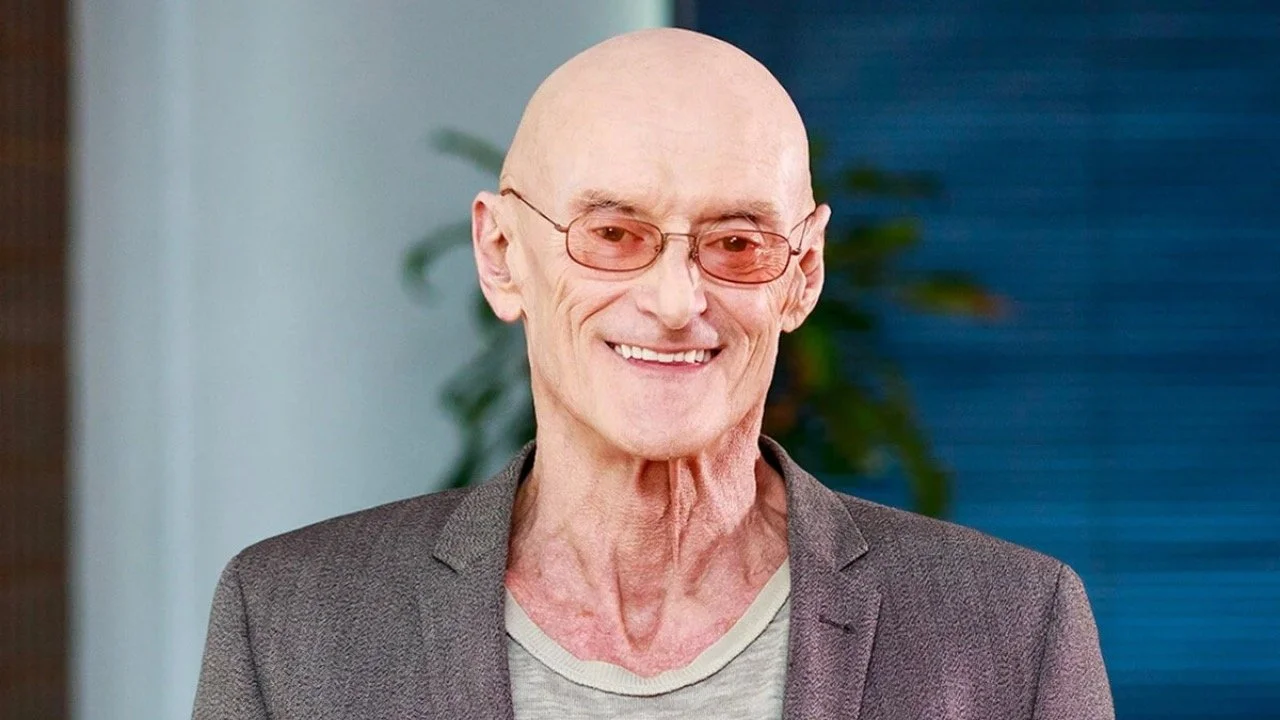

Who Is Ken Wilber and What Are the 5 Paths to Wholeness?
Have you ever felt like you are holding all the right pieces of a puzzle – a career, a health routine, relationships, perhaps a spiritual practice – but you are missing the box top that shows you how they actually fit together? This fragmentation is the defining struggle of modern life, leaving many of us feeling successful on paper yet internally scattered. We often try to fix this by simply doing more, assuming that adding another habit to our morning routine will finally bring peace.
Common sense tells us that doing more of the same usually yields the same results. When we chase isolated goals without a bigger picture, we end up with a crowded schedule but an empty sense of self. We might be physically fit but emotionally drained, or professionally successful but relationally isolated. The problem isn’t a lack of effort; it is the lack of a unifying map to guide that effort.
Enter Ken Wilber, a thinker often referred to as the “Einstein of Consciousness.” He didn’t just write another self-help book; he spent decades acting as a synthesizer, reading across physics, biology, religion, and psychology to find the patterns that connect them all. His work moves beyond choosing between conflicting truths – like science versus spirituality – and instead asks how they can all be true simultaneously.
The result of his work is known as the Ken Wilber philosophy, or Integral Theory. Think of it not as a rigid set of rules, but as a “Theory of Everything” for human experience. It functions like that missing box top for your life’s puzzle, providing a coordinate system that explains why you might feel stuck in one area even while thriving in another.
Applying this holistic approach allows you to stop guessing where to focus your energy. This framework introduces a comprehensive map of human potential, helping us answer the essential question: how can these 5 Paths to Wholeness transform a fragmented life into a complete one?
The Man Who Mapped the Mind: Why Ken Wilber is the ‘Einstein of Consciousness’
In a world overflowing with conflicting information, it often feels like we have to choose sides between logic and intuition. Do you listen to the hard-nosed neuroscientist or the serene meditation teacher? The disciplined CEO or the free-spirited artist? Ken Wilber addresses this divide. He created a framework designed to stop the fighting and start the connecting. Often called the “Einstein of Consciousness,” Wilber provides a way to see how these seemingly opposing viewpoints actually fit together.
Think of Wilber less as a traditional academic and more like a master DJ. Instead of mixing vinyl records, he remixes the greatest insights from physics, biology, religion, and sociology into one seamless track. His work in transpersonal psychology and human evolution isn’t about inventing new facts; it is about organizing what humanity already knows. By looking for the patterns that connect ancient wisdom with modern science, he built a comprehensive map that includes everything from your internal thoughts to global social systems.
At the heart of the Ken Wilber philosophy is a radical but practical idea: “No one is 100% wrong.” It sounds generous, but it is actually logical. No human mind produces 100% error; everyone sees a piece of the truth, even if that piece is small or distorted. A biologist describes the physical mechanics of the brain, while a mystic describes the subjective experience of the mind. Both are right, but both are partial. Integral Vision invites us to stop arguing over who has the “real” truth and start assembling the full picture.
Adopting this mindset changes how you navigate daily life, turning confusion into clarity. Instead of feeling overwhelmed by contradictory advice, you begin to see where each piece belongs, allowing you to honor your need for career achievement and your need for inner peace simultaneously. However, simply having this map isn’t enough; you also need to understand the vehicle moving through it. Even smart people often miss the vital distinction between a temporary spiritual high and permanent personal growth.
Waking Up vs. Growing Up: The Crucial Distinction Most People Miss
Have you ever met a yoga instructor who preaches inner peace but screams at a barista? Or perhaps you have felt a profound sense of calm during a weekend retreat, only to lose your temper five minutes into your Monday morning commute. This disconnect happens because we often confuse a temporary peak experience with a permanent personality trait. Ken Wilber clarifies this confusion by distinguishing between two distinct engines of human development: “Waking Up” and “Growing Up.”
Wilber describes “Waking Up” as accessing states of consciousness. Think of a state as a helicopter ride to the top of a mountain. You arrive instantly, see a breathtaking panoramic view of how everything is connected, and feel incredible. However, the helicopter eventually runs out of fuel, and you are dropped back at the base. “Growing Up,” on the other hand, refers to stages of development. This is the actual hike up the mountain. It is slow, sweaty work, but every step you take earns you a new, permanent baseline that doesn’t disappear when the moment passes.
To navigate your own growth, it is vital to recognize which engine you are using:
- States (Waking Up): Temporary and fluid. These are moments of “flow,” sudden insight, or deep relaxation. They give you a taste of freedom but don’t last.
- Stages (Growing Up): Permanent and structural. This is your emotional intelligence, your ability to handle complex perspectives, and your moral maturity. These are earned over years, not moments.
Ignoring this distinction often leads to “spiritual bypassing,” where we use high-flying spiritual concepts to avoid dealing with messy emotional baggage. True wholeness requires us to do both: we must access higher states of awareness while simultaneously doing the grounded work of maturing our personalities. With the difference between the view and the hike clear, we can explore how to intentionally cultivate that expanded awareness.
Path 1: Waking Up – The Art of Expanding Your Awareness
Most of us spend our days completely lost in the movie of our own lives. When you are stressed about an angry email or frustrated by traffic, you aren’t just experiencing those feelings; you tend to become them. Ken Wilber suggests that the path of “Waking Up” isn’t about fixing these feelings immediately, but rather stepping back to see them clearly. It is the subtle but powerful shift from being the actor trapped in the drama to the audience member watching the screen. This shift brings an immediate sense of relief because you realize that while your thoughts may be chaotic, the awareness holding them is calm.
Wilber often refers to this detached perspective as “The Witness.” Imagine sitting on a riverbank watching leaves float by, where each leaf represents a thought, a sensation, or an emotion. Most people instinctively jump into the river and get swept away by the current of their own minds, but the Witness simply sits on the bank and observes the flow without getting wet. You are not the anger, the anxiety, or the joy; you are the vast, open sky in which those weather patterns arise and pass. Discovering this part of yourself creates a “pocket of peace” that is always accessible, regardless of external circumstances.
Accessing this perspective on demand requires “State Training,” which is the core goal of practices like meditation or mindfulness. By repeatedly entering this state of open awareness, you interrupt the autopilot that drives your reactions. Instead of snapping back at a partner or spiraling into worry, you find a split-second gap where you can choose a different response. This practice doesn’t necessarily change the content of your life – the traffic is still bad, and the boss is still demanding – but it fundamentally changes your relationship to that content, reducing suffering even when the situation remains difficult.
However, even the most profound states of inner peace have a distinct limitation: they eventually fade. You might feel like a Zen master on your meditation cushion, but that state often evaporates when you face complex real-world challenges like raising children or navigating office politics. Waking up gives you freedom, but it doesn’t automatically give you maturity. To stabilize these insights and actually handle the complexity of modern life, we need to look at the second major engine of human potential: the hard, structural work of Growing Up.

Path 2: Growing Up – Mastering the Stages of Human Maturity
While “Waking Up” offers temporary relief from the drama in your head, “Growing Up” is about permanently upgrading the operating system that runs your life. Think of it like climbing a ladder: meditation might help you see the view from your current rung with more clarity, but it doesn’t automatically move you up to the next one. Ken Wilber defines this path as moving through stages of maturity, where your capacity to handle complexity, compassion, and multiple perspectives actually expands over time.
Most people assume that once they reach physical adulthood, they stop developing mentally, but research shows that adults can continue to evolve through distinct levels of worldview. At each new level, your “circle of care” widens. You start by caring only for yourself, then expand to your specific group, and eventually to all of humanity. Recognizing where you and others are on this map highlights the benefits of a holistic growth framework, as it turns confusing interpersonal conflicts into understandable differences in perspective.
Wilber generally summarizes these levels of consciousness into three primary tiers:
- Egocentric (Me): The starting point where focus is entirely on self-survival and personal gratification, common in young children or adults under extreme stress.
- Ethnocentric (Us): The stage where identity expands to include a specific group, tribe, team, or nation, valuing loyalty and “our way” above outsiders.
- Worldcentric (All of Us): A mature level where care extends to all human beings regardless of race or creed, prioritizing universal fairness and global logic.
Understanding these personal growth stages in Integral Theory helps explain why you might clash with a relative at dinner or struggle with a narrow-minded boss. They aren’t necessarily “wrong” or evil; they are often just interpreting reality from a smaller map. However, even if you reach a high level of intellectual maturity, you can still be sabotaged by hidden emotional wounds from your past. To address those invisible barriers, we must turn to the third path: Cleaning Up.
Path 3: Cleaning Up – How to Stop Your Past from Sabotaging Your Future
You might notice that you can be brilliant at work but act like a petulant child when your partner forgets to take out the trash. Ken Wilber explains this disconnect by distinguishing between your cognitive intelligence and your emotional health. You can be intellectually mature but emotionally stuck in a much younger phase because of unresolved baggage. This is the domain of “Cleaning Up,” which focuses on finding the hidden parts of yourself that trip you up when you aren’t looking.
Psychologists refer to these hidden parts as the “Shadow,” but they aren’t necessarily evil or dark; they are simply the pieces of your personality you’ve pushed away to feel safe or loved. When we lock these traits in the basement of our psyche, they don’t disappear; they just change their address. Often, they show up through projection, where you spot a trait you despise in someone else – like arrogance or laziness – precisely because you are refusing to acknowledge that same tendency within yourself.
Reclaiming these lost pieces prevents us from using meditation to hide from emotional pain, a common issue when solving spiritual bypassing. Wilber suggests a simple tool called the “3-2-1 Process” to reintegrate these subpersonalities. First, you face the person or emotion disturbing you (3rd person), then you talk to it (2nd person), and finally, you inhabit it (1st person). This shift allows you to reclaim the energy you were wasting on repression and is the most effective way to start shadow work without needing a degree in psychology.
Owning your shadow creates a genuine psychological wholeness because you stop fighting yourself. You become less reactive and more authentic, freeing up energy that was previously used to keep the basement door locked. Once you are no longer at war with your own history, you finally have the bandwidth to step forward and make an impact on the world around you via the fourth path: Showing Up.
Path 4: Showing Up – Living Your Truth in the Real World
Even with a clear mind and a “clean” emotional basement, you still have to operate in a complex physical world. Many of us get stuck because we try to solve every problem using only one tool – usually just willpower or just logic – while ignoring the environment around us. This is the essence of the “Showing Up” path: taking your internal growth and applying it effectively across every dimension of reality, not just inside your head.
Ken Wilber provides a cheat sheet for this called the AQAL model (short for All Quadrants, All Levels). Think of reality not as a flat line, but as a four-pane window through which you view every moment. If you only look through one pane – say, focusing only on your psychology while ignoring your physical health or your workplace culture – you are missing 75% of the picture. An Integral Theory summary suggests that to truly “show up,” you must attend to four fundamental perspectives simultaneously:
- The “I” (Interior-Individual): Your inner thoughts, values, and psychology.
- The “It” (Exterior-Individual): Your physical body, behavior, and brain chemistry.
- The “We” (Interior-Collective): Your relationships, shared culture, and how you get along with others.
- The “Its” (Exterior-Collective): The systems, laws, environment, and economy you live within.
Applying this map prevents burnout. You might realize your depression isn’t just a mindset issue (“I” quadrant) but a result of a toxic job environment (“Its” quadrant) or a lack of community (“We” quadrant). By checking all four boxes, you ensure your solutions actually stick. This comprehensive approach is one of the five pillars of integral life practice, ensuring you are fully engaged with reality. Once you have this map in hand, you need the fuel to explore it, which brings us to the final dimension: “Opening Up.”
Path 5: Opening Up – Cultivating the Energy of Flow and Passion
You can have the perfect roadmap for your life, but it remains useless if your car has no gas. This is where many of us stall; we understand intellectually what needs to change, but we feel too exhausted or numb to actually do it. In Ken Wilber’s framework, the meaning of “Opening Up” in integral practice is about reconnecting with your body’s natural battery – often called “Eros” or life force. It isn’t just about physical fitness; it is about tapping into the raw vitality that makes you feel alive, passionate, and willing to engage with the world rather than hide from it.
Modern culture often encourages us to live like “heads on sticks,” valuing logic while ignoring the wisdom held below the neck. Wilber argues that true wholeness requires somatic intelligence – the ability to listen to the feedback your body provides through sensations and gut feelings. When you ignore this signal, you cut yourself off from your intuition and drive. Opening up means intentionally dropping your awareness out of your busy mind and into your physical presence, turning your body from a heavy cargo you drag around into a sensitive instrument of perception.
This vitality is essential because growing as a person is physically demanding work. Integrating states and stages of development – turning fleeting moments of inspiration into permanent traits of character – requires immense emotional stamina. Without this deep well of life force, spiritual evolution becomes a dry, academic exercise rather than a transformative journey. By cultivating “Eros,” you aren’t just feeling better in the moment; you are fueling the engine that drives your maturation, allowing you to embrace the intensity of life without burning out.
Ultimately, “Opening Up” is the spark that animates the other four paths, turning a rigid self-improvement plan into a fluid, living process. It reminds us that we are not just solving a puzzle, but living a mystery that deserves our full, energetic participation. How do you fit these profound practices into a busy schedule without getting overwhelmed?
Designing Your Integral Life Practice: How to Start Today
Most people look at these five paths and think, “I don’t have time to manage five different hobbies every day.” Ken Wilber understood that modern life is frantic, which is why he developed the concept of Modules. Instead of rigid schedules, think of these practices as flexible blocks fitting into the gaps of your day. You only need to touch the five pillars of integral life practice consistently, even if just for a moment, to keep the system online.
We naturally gravitate toward what we are already good at, but this creates imbalance. You might be physically fit but emotionally stunted, or intellectually brilliant but spiritually hollow. Many Ken Wilber books on spiritual growth emphasize “cross-training” your soul – intentionally working on your weak spots to support your strengths. Engaging all five areas creates a synergy where physical health boosts mental clarity and shadow work deepens your relationships.
You can start immediately with “1-Minute Modules” – quick bursts of practice to stay connected:
- Waking Up: Take sixty seconds of conscious breathing before opening email.
- Growing Up: Identify one emotional trigger today and ask, “What does this say about me?”
- Cleaning Up: Text a friend to express gratitude.
- Showing Up: Read one page of a challenging book to stretch your perspective.
- Opening Up: Do five squats to reconnect with your body.
Consistency matters far more than intensity when building a new baseline for living. Integral spiritual development for beginners is not about immediate perfection; it is about showing up for yourself comprehensively. As these small moments accumulate, they stop feeling like tasks and start looking like a unified map, leading us from a fragmented existence toward a state of genuine wholeness.
From Fragmented to Whole: Your New Map for the Journey
Before finding this map, life likely felt like a scattered puzzle where your career, health, and beliefs were separate pieces that didn’t quite fit together. Now, you finally have the box top. Understanding who Ken Wilber is and what the 5 Paths to Wholeness are gives you the framework to organize that chaos into a meaningful picture. You can now see how your internal thoughts, physical reality, relationships, and societal roles don’t have to compete for your attention. Instead, they act as supporting pillars for a single, robust structure.
It is natural to look at this comprehensive map and feel a sudden pressure to fix everything at once, but that is never the goal of Integral Theory. Wilber’s philosophy isn’t about instant perfection or racing to the highest level of consciousness overnight. It is about recognizing that personal growth stages unfold gradually. Some rooms in your “house” might be tidy while others need a little more light, and that is perfectly okay. The map exists to show you where you are and help you navigate, not to judge you for not having arrived at the destination yet.
Your best move right now is to simply pick one path that feels slightly neglected and give it a small amount of focused energy. Maybe you spend ten minutes journaling to check in with your emotional state, or perhaps you commit to a short walk to reconnect with your physical body. By strengthening just one pillar, you stabilize the whole structure. You do not need to master the entire theory to experience a shift; you only need to start with the puzzle piece sitting right in front of you.
Remember one of Wilber’s most liberating insights: no one is smart enough to be wrong all the time. This includes you. Trust that your current perspective has value, even as you strive to expand it. By embracing these paths, you aren’t replacing who you are; you are simply becoming a more complete, integrated version of yourself. You have the map and the tools, so take a deep breath and enjoy the view from where you stand right now.