
Wim Hof breathing method
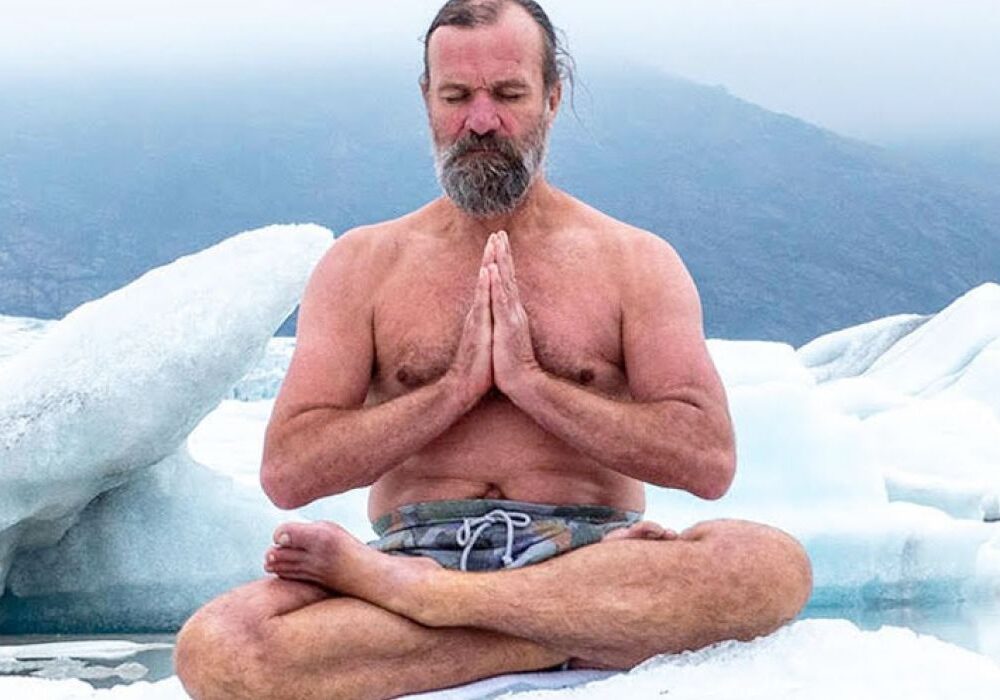
Breathing techniques, whether in the context of stress, meditation, or oxygenating the body, are truly numerous. And although breathing is so obvious to us that we don’t pay any attention to it at all, it is precisely breathing that can become an amazing tool in reducing stress, anxiety, and restlessness. One of the most popular and effective techniques is the Wim Hof breathing method. Wim Hof, known as the “Ice Man,” became famous for his extreme feats in icy water and snow.
The Wim Hof Method, or WHM, is based on three pillars: breathing technique, cold exposure, and mental training. At this point, we will focus only on breathing because it is the most important in the context of reducing everyday stress and anxiety.
Wim Hof’s breathing exercise is quite simple. It consists of a series of deep, dynamic inhalations and passive exhalations, repeated about thirty times. After the last exhalation, you hold your breath for as long as is comfortable for you. When you feel the need to inhale, you take a breath and hold it for several seconds, for as long as is comfortable for you. Then you repeat the whole cycle, preferably 3-4 times.
How does Wim Hof’s breathing method affect stress?
The WHM practice acts as a natural brake and reset for processes related to the fight-or-flight response. Scientific research shows that regular practice of this technique can effectively lower cortisol levels and even increase endorphin and dopamine levels. When you hold your breath, your body activates the parasympathetic nervous system, which is responsible for relaxation, regeneration, and calming. As a result, your muscles relax, your heart slows down, and your mind calms down. It is a natural way to get out of a state of tension without the need for external measures. In addition, intense breathing leads to respiratory alkalosis (a decrease in CO₂ in the blood), which affects your level of arousal and can temporarily reduce feelings of anxiety. On the other hand, deep, controlled breathing and breath holding reduce the activity of the HPA axis (hypothalamic-pituitary-adrenal), which is key in the stress response. One more important thing – focusing on your breath is an element of mindfulness, which is an important part of mental and spiritual development.
What feedback do people give?
Many people who struggle with chronic anxiety say that Wim Hof’s method gives them really solid support. Here are some comments that can be found on YouTube under the video with this technique:
“I started this several months ago. My anxiety is under control, I have gotten back into shape, and now, after almost 30 years, Im smoke free for a week.”
“having doing the wim hof method everyday for two months now – and battling narcoleptia and clinical depression for 20 years – it literally brought me back to life
I will never thank you enough”
“I started doing this practice daily over 18 months ago and it has helped me break an addiction to heroin and survive one of the most testing years of my life, with a smile on my face… Thank you.”
“A cycle of negative thoughts and stress. A busy mind. 11 minutes later, clarity. Thank you.“
“I started with meditation to manage anxiety, and that led to breath work and that led me here. I have been doing the Wim Hof breathing method for a month now and it has gone beyond just managing anxiety, it has eradicated it. I highly recommend doing the cold showers daily, even if you can only stand it for a minute or two it’s been a game changer. So many things now seem possible.”
“I literally cannot believe how good this made me feel. I wish someone taught me this as a child”
These aren’t some made-up comments written by bots. You’ll find hundreds of them under the video.
How to get started?
Just give it a try. It’s best to start with a YouTube video. Just like meditation, it’s not a magic trick that will change your life after one session, but if you practice it regularly, it can bring surprising results. It helps you calm down, reduces tension, and allows you to better manage your emotions. The body learns to be calm and the mind finds balance.
This technique is one of the elements of a 28-day program for stress and anxiety. If you would like to explore the other 27 methods, tips, or insights, you can do it for free here: 28-DAY PROGRAM FOR STRESS AND ANXIETY